Edinburgh woodworm
Woodworm treatment in Edinburgh
Nearly all of it is the common furniture beetle in softwood, and much of that is old damage that stopped years ago. The East also holds enough genuinely old hardwood that identifying the beetle occasionally changes the entire job.
- Survey first, price secondNobody can quote blind
- Report in writingUsable in a home report query
- East of Scotland onlyLothians, Fife and Borders
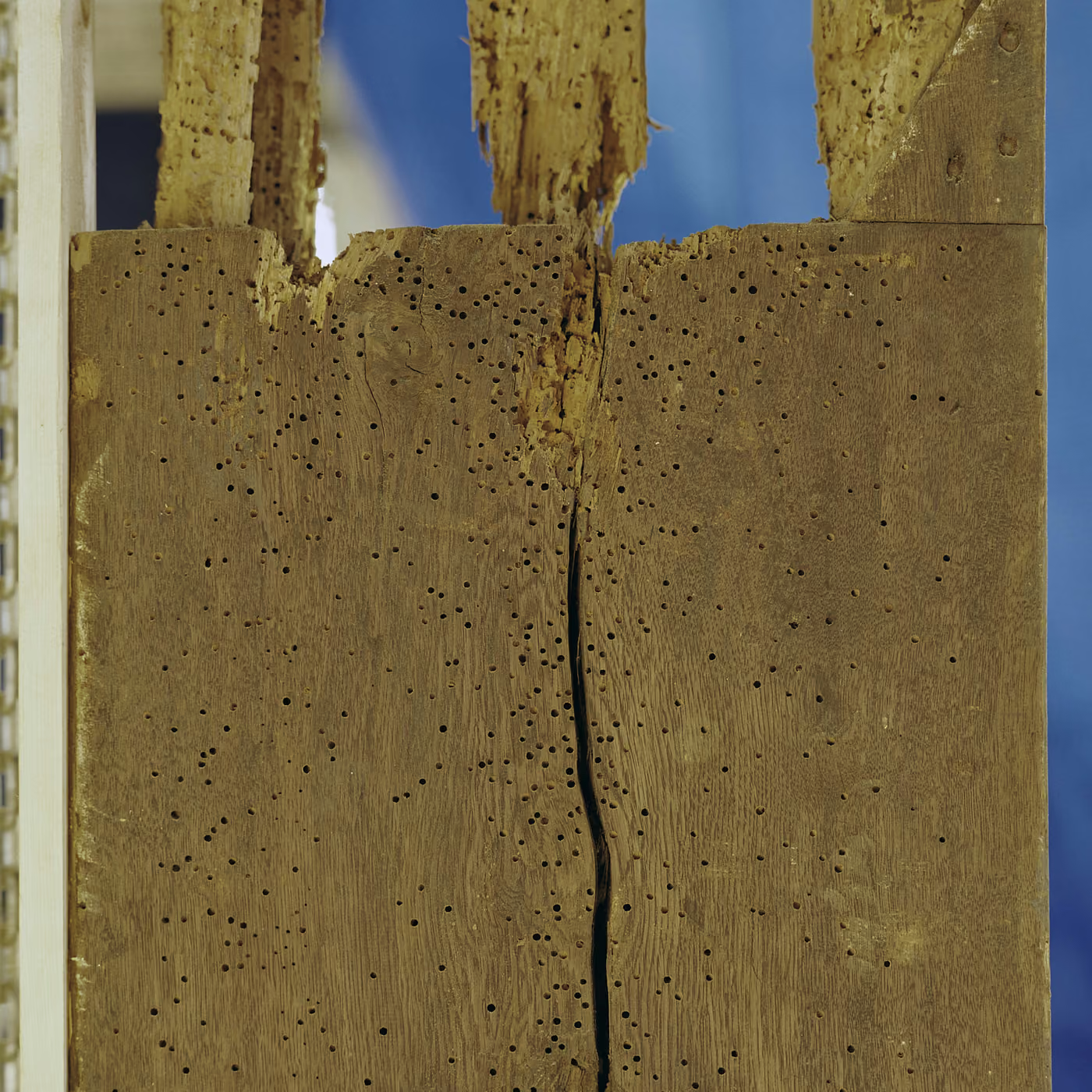

Woodworm is the one timber problem where the answer to what is it changes what happens next in a serious way. With rot, the difference between wet and dry alters how far the repair reaches. With beetle, the difference between the two species you might reasonably meet in an Edinburgh building alters whether you are booking a treatment or a structural conversation.
What the beetles are, how treatment works and how to tell whether anything is still alive in there is all on thenational woodworm page and in the guide totelling if woodworm is active. This page is about which of them turns up in which sort of eastern property, and why that distinction is worth making before anybody quotes you.
Book a survey
Three questions. You do not need to know which problem you have.
Two beetles, and the hole tells you most of it
You do not need a specialist to make a first pass at this. Stand in front of the timber with a torch and a ruler and look at three things: the size of the holes, the type of wood they are in, and what is on the floor underneath.
| What to look at | Common furniture beetle | Deathwatch beetle |
|---|---|---|
| Species | Anobium punctatum | Xestobium rufovillosum |
| Exit holes | Round, about 1 to 2mm, like a pin prick | Round but noticeably bigger, around 3mm |
| Timber it wants | Softwood, sapwood especially. Floorboards, joists, furniture | Old hardwood, mainly oak, usually already softened by fungal decay |
| Frass, the dust it leaves | Fine and gritty, lemon shaped grains under a lens | Coarser, bun shaped pellets, visible without a lens |
| Adults emerge | Roughly May to August | Spring, and this is the one that taps |
| What it usually means | A treatment question, often no treatment at all | A damp question and sometimes a structural one |
The size difference sounds small on paper. In front of you it is obvious. A 3mm hole in an oak beam does not look like the pin pricks in a softwood floorboard, and once you have seen both you will not confuse them again.
Where the old hardwood actually is
Here is the part that matters for Edinburgh, and the part most national copy gets wrong by implication. The overwhelming majority of the city's housing stock is nineteenth century tenement and terrace, and it is built from imported softwood: Baltic and later North American pine, in the floors, the joists, the roof and the joinery. Deathwatch beetle has essentially no interest in that, so for most Marchmont, Leith or Morningside flats the species question is answered before anyone arrives.
Old structural oak lives in a narrower set of buildings, and the East has more of them than most of Scotland.
- Pre 1800 property in the Old Town, the Canongate and the closes off the Royal Mile
- The older burgh cores of Fife and East Lothian, and buildings around Linlithgow and Dalkeith
- Converted churches, mills, steadings and stable blocks, which is where the biggest sections tend to be
- Borders farmhouses and estate property around Peebles and Galashiels
- Anywhere a large reclaimed beam or an old timber lintel has been built into a later wall
That last one catches people out. A perfectly ordinary Victorian building can contain one salvaged hardwood beam over an opening, and that single member can hold an infestation the rest of the building will never have.
Why the identification changes the job
Common furniture beetle in a softwood floor is, in the ordinary case, a contained problem. If it is live, the timber is treated, the moisture conditions that made it attractive are addressed, and the structure is very rarely in question. Often the honest finding is that nothing is live at all.
Deathwatch beetle is a different animal in every practical sense. It works in hardwood that fungal decay has already softened, which means finding it is also finding a damp problem, usually where a beam end is built into a wet stone wall. Its larvae stay in the timber for years, tunnelling deep into sections that may be substantial, so what looks like scattered holes on a surface can sit above a beam end with very little sound wood left inside it.
That changes the work in three ways. Surface treatment reaches only the outer layer of a large section, so it is not on its own an answer. The wall and the beam end have to be dried and the water stopped, or the conditions the beetle needs simply remain. And somebody has to form a view on whether the member still carries what it is meant to carry, which can mean a structural engineer rather than a treatment contractor. A quote to spray an oak beam, with none of that, is not addressing the problem.
Most woodworm we are called to needs no treatment. Holes in a floor are evidence that beetles once left, not that any are still there, and a great many Edinburgh floors carry damage that stopped decades ago when the building was drained, heated and made dry. Genuinely small surface attack in a piece of furniture is also a DIY job: a proprietary fluid from a merchant, applied properly, does it. Saying so is the only reason you have to believe us when we say a live outbreak in an oak beam end over a wet wall is not.
Damp is the common thread
Both beetles want timber with a raised moisture content, which is why beetle and rot so often turn up on the same visit and why a survey looks at them together. In eastern property that usually means the same handful of situations: a joist end in an outside wall, timber in an unventilated basement or floor void, the back of a stair against a damp gable, or a beam end above a leaking gutter run.
It also explains why treatment alone tends to disappoint. Kill everything in the timber and leave it damp and you have made the building attractive to the next thing that arrives, whether that is beetle again or the far more serious fungal problem underneath. Thetimber survey looks for the water first for exactly this reason, and covers rot and beetle in the same visit.
What you get before anyone asks for money
A visit, then a written report: which beetle, whether it is active, which timbers are affected, whether the section has lost strength, what the moisture readings were, what work is proposed and what it costs. If the finding is old and inactive, that is what the report says, and that written line is often precisely what a lender or a solicitor is waiting for. Thenational cost page sets out what moves the price, which in this trade is nearly always access and area rather than the beetle itself.
Questions about beetle in eastern property
My flat is 1890s. Could I have deathwatch beetle?
Almost certainly not. Deathwatch beetle wants old hardwood, usually oak, and usually oak that fungal decay has already softened. A late Victorian tenement is built from imported softwood throughout, which that beetle has very little interest in. What you will have, if anything is live, is common furniture beetle. The exception is a reclaimed hardwood beam or lintel salvaged from something older.
I heard a tapping in the spring. Is that the deathwatch beetle?
It might be. The tapping is adults knocking their heads against the timber to find each other, and it happens on quiet evenings in spring in buildings that hold suitable oak. It is also, far more often, a radiator pipe, an expanding joist or a bird in a soffit. If the building has no old hardwood in it, the tapping is not a beetle. If it does, it is worth someone looking.
The holes are there but I have no idea how old they are. Does it matter?
It is the single most important question, and it decides whether you spend anything at all. Old, abandoned flight holes look exactly the same to a worried owner as fresh ones, and a great many Edinburgh floors are covered in damage that stopped decades ago. There are checks you can do yourself before booking anything, which the national guide to spotting active woodworm sets out.
Do I need to move out while treatment is carried out?
For most work in an occupied flat, no. Access rooms need clearing, the treated area has to stay empty for a stated period while it dries, and there will be instructions on ventilation, pets and fish tanks. Anyone who cannot tell you exactly what those conditions are before starting should not be starting. Larger structural work in a building with deathwatch beetle is a different matter and gets discussed on its own terms.
Woodworm turned up in the home report. Does that stop a mortgage?
On its own, rarely. What lenders want is a specialist report saying whether it is active, how far it goes, whether the timber has lost strength, and what the work costs. An entry saying old, inactive damage with no treatment required is a perfectly acceptable answer and is often what the visit concludes. The problem for a lender is an unanswered question rather than a beetle.
Book a survey
Three questions. You do not need to know which problem you have.