Costs
Dry rot treatment cost
What the work usually costs in 2026, what pushes a job from the bottom of a range to the top, and why the honest answer to the price question begins with lifting a board.
- Priced after opening upNot from a photograph or a phone call
- Itemised, not a lump sumYou see what each figure is for
- Common repairs flaggedWhere a cost is shared, we say so
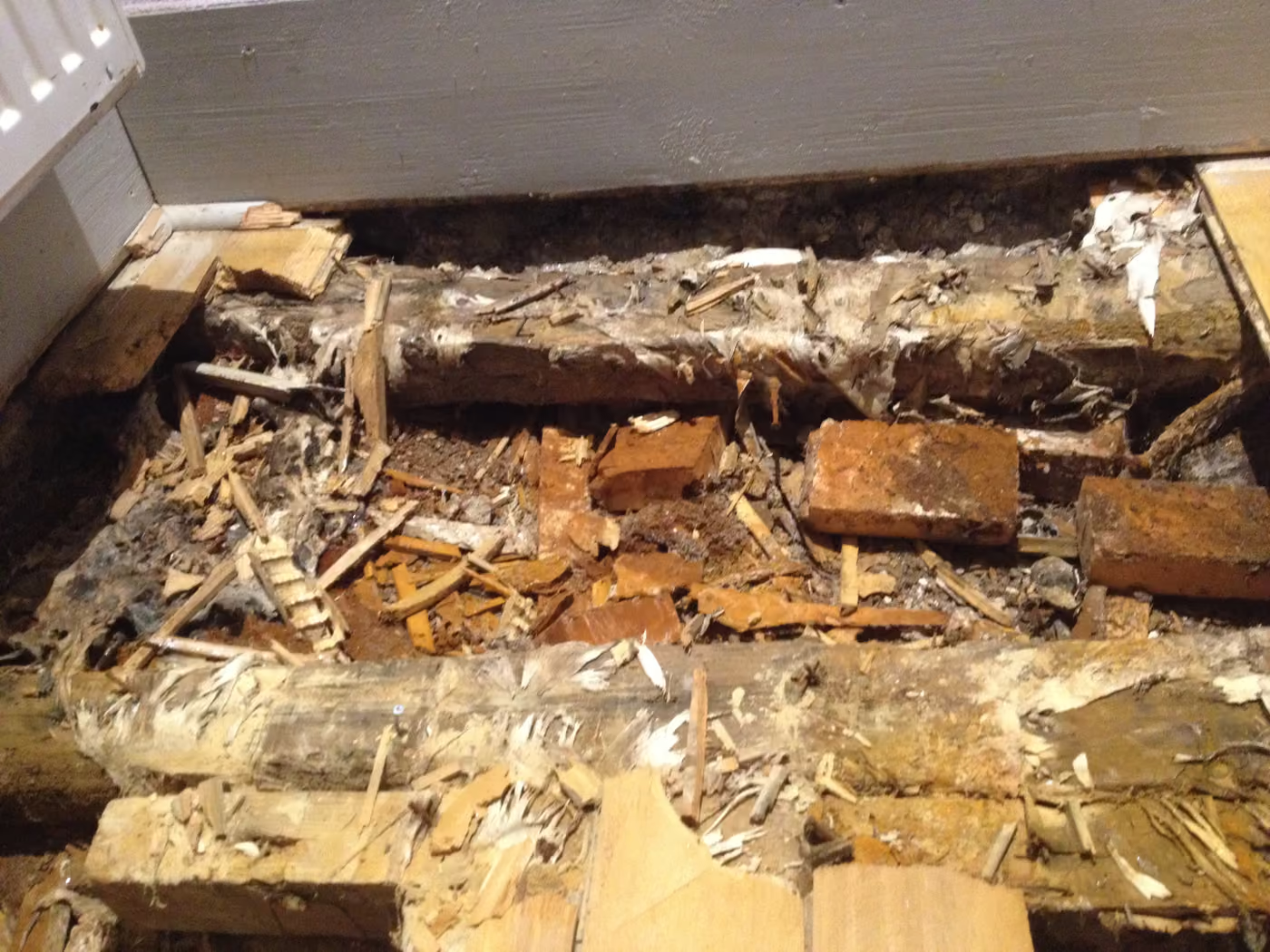

Most dry rot work in Scottish property lands somewhere between about 800 and 15,000 pounds, and that spread is not evasion. It is the actual range, because the same fruiting body on the same skirting can mean one soft joist end or a floor structure that has been feeding a fungus through a solid wall for six years. The figures below are typical ranges for work of each kind, not a quote for yours.
What follows is where the money goes, so that when you get a quote you can see which job you are being priced for. If two firms are 4,000 pounds apart, it is very rarely the timber that differs. It is how much of the building each of them proposes to open up.
Book a survey
Three questions. You do not need to know which problem you have.
Typical ranges
| Work | Typical range | What moves it |
|---|---|---|
| Small localised outbreak | £800 to £2,000 | One joist end or a patch of floor, cause already fixed, cut back, treat, replace and make good. |
| Moderate outbreak into masonry | £2,000 to £5,000 | Plaster off over the affected area, wall irrigation, several timbers out, drying time before rebuild. |
| Serious outbreak across a floor | £5,000 to £15,000 | A whole floor or growth reaching adjoining rooms. Structural timber, temporary support, longer programme. |
| Replacement timber, per joist | £150 to £400 | Length, section size, access and whether the end has to be built back into a solid wall. |
| Specialist survey, where chargeable | £150 to £400 | Intrusive opening up, moisture readings, a written report you can put in front of a lender. |
| Scaffold or tower access | £400 to £2,500 | Needed when the cause is high up. A tower for a hopper, a full elevation for a shared gutter run. |
Ranges, not quotes. Every one of these assumes somebody has looked. Anybody willing to give you a firm figure for dry rot without seeing the property is pricing the job they would like to sell you.
What actually drives the price
Seven things move a dry rot quote, and they move it by a lot more than materials do.
- Extent. Not the size of the patch you can see, but how far the strands have run. This is the single biggest variable and the only one that cannot be judged without opening up.
- Whether it has gone into masonry. A repair confined to timber is a carpentry job with a fungicide on the cut ends. Once the fungus is inside a solid sandstone wall you are into plaster removal, drilling and irrigation, and that usually doubles a job before any new timber arrives.
- Whether the timber is structural. A skirting is a nuisance. A floor joist, a lintel end, a beam bearing or a stair carriage means temporary support, a different class of replacement timber, and sometimes a structural engineer to sign off the detail.
- Access. A ground floor room with a hatch is cheap to work in. A second floor bay window, a stair void or a cellar reached through a close is not. Time on site is most of the labour cost, and awkward access is simply more time.
- Scaffold. Frequently the surprise item. If the cause is a failed gutter, a hopper or a slipped slate, somebody has to get up there safely to fix it, and that is a separate cost from the rot work itself.
- Whether the cause is shared. In a tenement it very often is, which is the section below.
- Making good and redecoration. Plaster, floor covering, skirting, cornice and paint. Some quotes include all of it, some stop at bare plaster, and comparing two quotes that stop in different places is the commonest way people end up feeling misled by a firm that was not actually being dishonest.
The tenement point, which changes what you personally pay
In a Scottish tenement the roof, the gutters, the downpipes, the hoppers and the common close are shared. If the water that started your dry rot came from a cracked hopper three floors up or a gutter run over the close, the repair to that cause is generally a common repair, split between owners under the title deeds or the Tenement Management Scheme rather than paid for by whoever has the fungus in their ceiling.
That matters to your budget in two directions. It can reduce what you pay substantially, because a 2,000 pound roof repair split eight ways is 250 pounds to you. It can also delay everything, because common repairs need notice, agreement and sometimes a majority vote, and meanwhile the timber inside your flat is still wet. In practice a lot of owners get the internal work quoted separately from the common cause, so the two can proceed on different timescales without either holding up the other.
So when you compare quotes, check which side of that line each item sits on. A quote that bundles the shared gutter into your bill without telling you it is a common repair is not necessarily wrong, but it is a conversation worth having with your neighbours before you pay for all of it yourself.
What a quote has to itemise
If a quote is one figure and one sentence, you cannot compare it to anything and you cannot tell later whether you got what you paid for. A usable quote separates out at least these.
- The cause, what it is, and who is fixing it, with a price against it
- How much timber comes out, in metres or by number of joists, and what goes back
- Which walls are being stripped, drilled or irrigated, and why those ones
- What is being sprayed or brushed on, and over what area
- Temporary support or structural work, if any
- Access and scaffold, separately, so it is not hidden in the total
- Where making good stops, plaster, floor, skirting, decoration
- Drying time, and whether a return visit is included in the price
- The guarantee, its length and what would void it
- VAT, stated one way or the other
Anything on that list which is missing is not automatically a problem. It is just a question. Firms that do this work properly are used to being asked, and the answers usually take five minutes.
When you should expect to pay for the survey
A brief look to establish whether there is a job at all is commonly free. A survey becomes chargeable when it involves genuine work: lifting boards, taking plaster off, moisture readings across a property, tracing a cause, and a written report that names the fungus, the extent, the cause and the recommended work. That sits in the 150 to 400 pound range, and it goes up if access equipment is needed or the property is large.
It is worth paying for in three situations in particular: when a lender or a Scottish home report has asked for a specialist timber report, when you are buying and want the extent priced before you commit, and when quotes you have already had differ so widely that you need an independent view of what is actually there. Many firms credit the survey fee against the work. Ask, because it is usually offered rather than volunteered. There is more on what the visit covers on the dry rot survey page.
There is a fourth situation, and it is the one where the fee most often pays for itself: an insurance claim. If you are trying to show that a burst pipe caused an outbreak rather than years of slow damp, an independent report naming the cause is the document the whole claim turns on, and the ombudsman expects to see exactly that kind of evidence. Which claims succeed, andwhat an insurer will and will not pay for, is worth reading before you phone them.
Nobody can price this accurately without opening up, including us. The ranges on this page are honest averages and they will still be wrong for somebody reading this, in both directions. We have seen a frightening looking fruiting body turn out to be a single joist end that had dried out years ago after somebody fixed the downpipe, and we have seen a small stain in a cupboard turn into a floor. Anyone who gives you a firm figure before the boards come up is either guessing or has decided in advance which job they want to sell you.
Where you can sensibly save money, and where you cannot
Making good and redecoration are the obvious place to save. If you can plaster, or you have a joiner you trust, taking the finishing work out of a specialist quote often removes a meaningful chunk, and it does not affect whether the treatment works. Some owners deliberately leave a floor accessible for a few months so it can be inspected before it is closed up, which costs nothing and is genuinely good practice.
Where you cannot save is on the cause and the drying. Skipping the roof repair to afford the timber repair means paying for the timber repair twice, and there is no version of this where a chemical treatment compensates for a wall that is still getting wet. If the money is tight, deal with the water first and phase the rest. That order is not us being difficult, it is the only order that works.
Compare like with like on the guarantee too. A long guarantee that depends on annual paid inspections and excludes any recurrence linked to a shared gutter is worth less than a shorter one with fewer conditions. Our page onthe guarantee sets out what to look for, and thedry rot treatment page explains what the work involves so you can read a specification and know what each line is for.
Questions people ask
Why will nobody give me a price over the phone?
Because the visible damage is the end of the problem rather than its extent. Dry rot travels through masonry, so the difference between a job at the bottom of the range and one at the top is usually what is found once a few boards come up. A firm number given before that is either a guess or a starting point that will move.
Is a dry rot survey free?
A short look to see whether there is a job is often free. A proper intrusive survey with moisture readings and a written report usually costs between 150 and 400 pounds, and many firms credit it against the work if you go ahead. Paying for the survey is generally the cheaper route, because a free visit is paid for somewhere in the quote.
Does buildings insurance cover dry rot?
Rarely for the rot itself, which insurers treat as gradual deterioration. A sudden escape of water that caused it may well be covered, including the resulting damage, so the wording worth reading is the one about the leak rather than the one about fungus. It is always worth asking before you assume not.
Can I split the work into stages to spread the cost?
Stopping the water and drying the structure has to come first and should never be deferred, because it is what halts the spread. Cosmetic making good and redecoration can usually wait, and some people leave a floor accessible for a few months on purpose so it can be checked before it is closed up. Deferring the timber repair itself is a false economy.
Why is one quote three times another for the same rot?
Almost always because of how much of the building each firm proposes to take apart. Wholesale plaster removal and blanket wall irrigation add thousands and are only justified where the fungus has actually been found in that masonry. Ask each firm which finding justifies which item, and the two quotes usually stop looking like the same job.
Do these figures include VAT?
Treat them as excluding it unless a quote says otherwise. Ask outright, because a quote given without VAT next to one given with it is a twenty per cent difference that has nothing to do with the work.
Book a survey
Three questions. You do not need to know which problem you have.