One visit, three problems
Timber survey for rot, woodworm and the damp behind them
If you do not know which of the three you are dealing with, this is the visit that settles it. One surveyor, one appointment, and a written report covering dry rot, wet rot, woodworm and the moisture causing two of them.
- All three in one visitRot, woodworm and the damp behind them
- A written report either wayIncluding when the answer is nothing wrong
- Central Belt onlyTwo teams, West and East
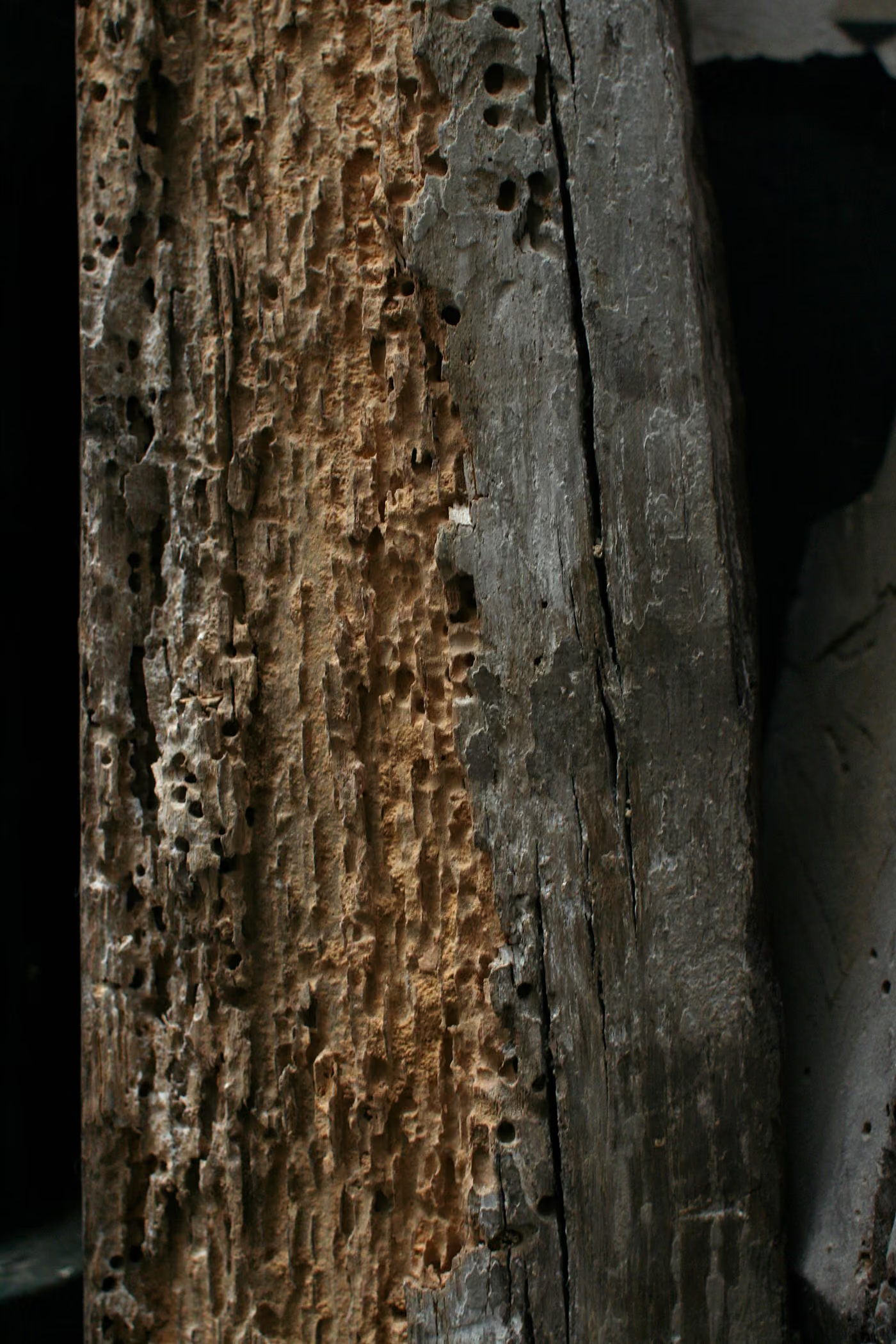

Most people who book one of these cannot name the problem yet, and they do not need to. There is a soft patch under a window, or a scatter of small round holes in a floor, or a smell in a cupboard, or a line in a home report telling them to get a specialist timber and damp report before the sale goes any further. All of those lead to the same appointment.
A timber survey is an inspection of the wood in a building and of the moisture reaching it. It covers dry rot, wet rot and woodworm together, because they turn up in the same places, they are found by looking in the same voids, and two of the three are consequences of the same water. The output is a written report saying what is there, how far it extends, what caused it, and what would be involved in putting it right.
You get the report whether or not any work follows. That is the point of paying for a survey rather than accepting a free look from somebody whose only interest is quoting.
Book a survey
Three questions. You do not need to know which problem you have.
Where is the property?
We work as two teams. Pick the side of the country you are on and you will get the one that covers it.
What the survey actually covers
Four things, in one visit, and the fourth is the one that stops the other three coming back.
- Dry rot. Whether Serpula lacrymans is present, and, far more importantly, how far it has travelled from the water that started it. This is the finding that changes a quote most.
- Wet rot. Which timbers have decayed, how much strength they have lost, and whether the timber is still wet or dried out long ago.
- Woodworm. Whether the beetle activity is current or historic, which species it is, and whether the affected timber is structural or cosmetic.
- The damp causing it. Readings, and a view on the source: rainwater goods, a defective roof, ground levels, a blocked airbrick, a plumbing leak, or condensation.
Why one visit covers all of it
Because it is the same access. The surveyor lifting a board to look at a joist end for rot is already looking at the underside of the floor, which is where furniture beetle activity actually lives, and is already taking moisture readings in the wall that both problems depend on. Splitting that into three appointments means paying three times to open the same floor.
It also avoids a specific and expensive error. Rot and woodworm are often found together, because damp softened timber is more attractive to beetle and more hospitable to fungus, so a survey looking for only one of them tends to find only one of them. If you have been told you have woodworm and nobody has mentioned moisture, that is worth asking about.
What happens on the day
- A look at the outside first. Gutters, downpipes, hoppers, roof edges, ground levels, airbricks, sills and pointing. Nearly every rot case has an external cause, and it is quicker to find it out there than to work backwards from a stain.
- The affected area, in detail. Whatever brought you to this in the first place, examined properly, with a torch held at a low angle and something to prod the timber with.
- Moisture readings. Across the suspect timber and the surrounding wall, so there is a record of what is wet, what is dry and by how much, rather than an impression.
- Opening up, where it is needed. A small number of floorboards, a hatch, a section of skirting, or a look into a void. Chosen spots, put back afterwards, and always with your agreement first.
- Identification. Naming the fungus or the beetle, and deciding whether it is active or historic. This is the finding everything else hangs on, because dry rot and wet rot lead to very different jobs.
- The report. Written up afterwards and sent to you, including the readings, the extent, the cause, and what the work would involve.
What the report contains
A report worth the money is specific enough that a second contractor could price from it without seeing the property. Expect it to name the rooms and the timbers, not the building in general.
- What was inspected, and just as importantly what could not be reached.
- The problems found, identified by species where that is possible.
- Whether each one is active or historic, and the evidence for that.
- Moisture readings and where they were taken.
- The likely source of water and what needs doing about it.
- Recommended works, in enough detail to be priced and compared.
- Anything that should be looked at again once other repairs are done.
A survey cannot see through a floor it was not allowed to lift. If the report says an area was inaccessible, that is not a hedge, it is the honest limit of what one visit can establish. Rot behind a fitted kitchen or under a laminate floor that nobody wants disturbed before an offer goes in is a real constraint. The report should say so plainly rather than imply the whole building was seen.
Lenders, home reports and solicitors
A large share of these surveys happen because of a purchase rather than because somebody found something. The Scottish home report includes a single survey, which is a general inspection by a chartered surveyor. When that surveyor sees decayed timber, beetle holes, damp staining or rainwater goods in poor condition, the usual response is a recommendation for further investigation by a specialist, and a category rating that a lender then picks up.
What the lender is asking for at that point is a written report from a timber specialist that identifies the problem, states its extent and cause, and sets out the works. Sometimes they want a quotation alongside it, and sometimes they will retain part of the loan until the work is done and signed off. A verbal reassurance from a contractor is no use in that conversation. The document is what moves it forward, and it is also what you use to negotiate on price with the seller, or to put a common repair to the other owners in a tenement.
When it is chargeable and when it is not
The trade generally splits this two ways, and it is fair to ask which applies before anybody visits.
Where you already have a defect and want it quoted, the visit is often free or nominal, because the contractor is there to win work. Where you need a written report for a third party, a lender, a solicitor, a factor or a seller, that is a piece of professional work with a fee attached, because the document has value whether or not any work follows. Buying a property is almost always the second case.to be confirmed
One thing worth watching for: a free survey from a firm that only makes money by finding work is not the same product as a paid report. It may still be perfectly honest. It is simply not independent, and if you need the document for a lender, it may not be accepted anyway.
What you get when the answer is nothing wrong
This happens more often than you would think, and it is a good outcome rather than a wasted trip. Old woodworm holes with no fresh dust and clean, dry timber around them mean an infestation that finished years ago. A dark patch under a bathroom that is bone dry to a meter means a leak somebody fixed and nobody documented. Historic damage that stopped when the water stopped is genuinely common in Scottish property, because most of this stock has had a century of leaks and a century of repairs.
If that is the finding, you get it in writing, with readings to support it. When you are buying, that piece of paper is worth what you paid for it on its own: it either takes an objection off the table or gives you a documented reason to reduce your offer. When you are selling, it answers the question before a buyer's surveyor raises it.
Some of this you can check yourself first. If you have found holes in a piece of furniture or a loft hatch, look for fresh, pale dust and clean-edged holes before booking anybody. Small surface woodworm in furniture is a DIY job with a tin from a merchant. It is worth saying so, because it is the reason to believe us when we tell you the thing in your floor void is not.
If you already know which problem you have
The umbrella survey is the right starting point when you are unsure. If you have narrowed it down, these go into more detail on what the surveyor is doing and why.
- Woodworm survey, including how activity is distinguished from old damage.
- Dry rot survey, which is mostly the work of tracing where the fungus has already gone.
- Wet rot survey, which is mostly about the real extent of soft timber before you set a budget.
- Still not sure which of the two rots you are looking at?Compare wet rot and dry rot first. It takes a torch and five minutes.
Questions people ask
How long does a timber survey take?
For a typical flat or house, an hour to two hours on site. A large property, a building with cellars, or a case where floors have to be lifted in several rooms can take most of a morning. The written report normally follows within a few working days rather than the same afternoon, because the moisture readings and the identification have to be written up properly to be worth anything.
My home report says to get a specialist timber and damp report. What is that?
It is this. The single survey in a Scottish home report is a general inspection, so when the surveyor sees decayed timber, beetle holes or damp staining, the standard response is to recommend a specialist inspection rather than to price it. That recommendation is asking for a written report from a timber specialist identifying what is there, how far it extends, what caused it and what it would take to put right.
Do I need three separate surveys for rot, damp and woodworm?
No, and you should be wary of anybody selling them that way. The same visit covers all of it, because the surveyor is in the same floor void and the same wall for each one, and because damp is the cause of two of the three. Separate visits mean paying for the same access three times.
What if the survey finds nothing wrong?
That is a genuine and reasonably common outcome, particularly when what looks alarming turns out to be old damage from a leak that was fixed years ago. You get that in writing, which is exactly what you want if you are buying, negotiating a retention with a lender, or arguing with a factor about a common repair.
Do you have to lift floorboards?
Usually a small number, yes, in chosen places rather than across a room. Rot at joist ends and active woodworm in floor timbers are not visible from above, so a survey that never opens anything has looked at decoration rather than at structure. The boards are lifted carefully and put back.
Is a timber survey the same as a damp survey?
They overlap heavily and are often sold as one visit. A damp survey is about moisture in walls and its causes. A timber survey is about what that moisture, or beetle activity, has done to the wood. Since wet rot and dry rot are consequences of damp, any competent timber survey traces the water as part of the work.
Book a survey
Three questions. You do not need to know which problem you have.