Wet rot
Wet rot treatment cost
Typical UK ranges for 2026, what pushes a job to the top of one, and why the expensive part is nearly always the water rather than the timber.
- Priced after lookingNever off a photograph
- Itemised in writingTimber, cause and making good, separately
- Central Belt onlyTwo teams, West and East
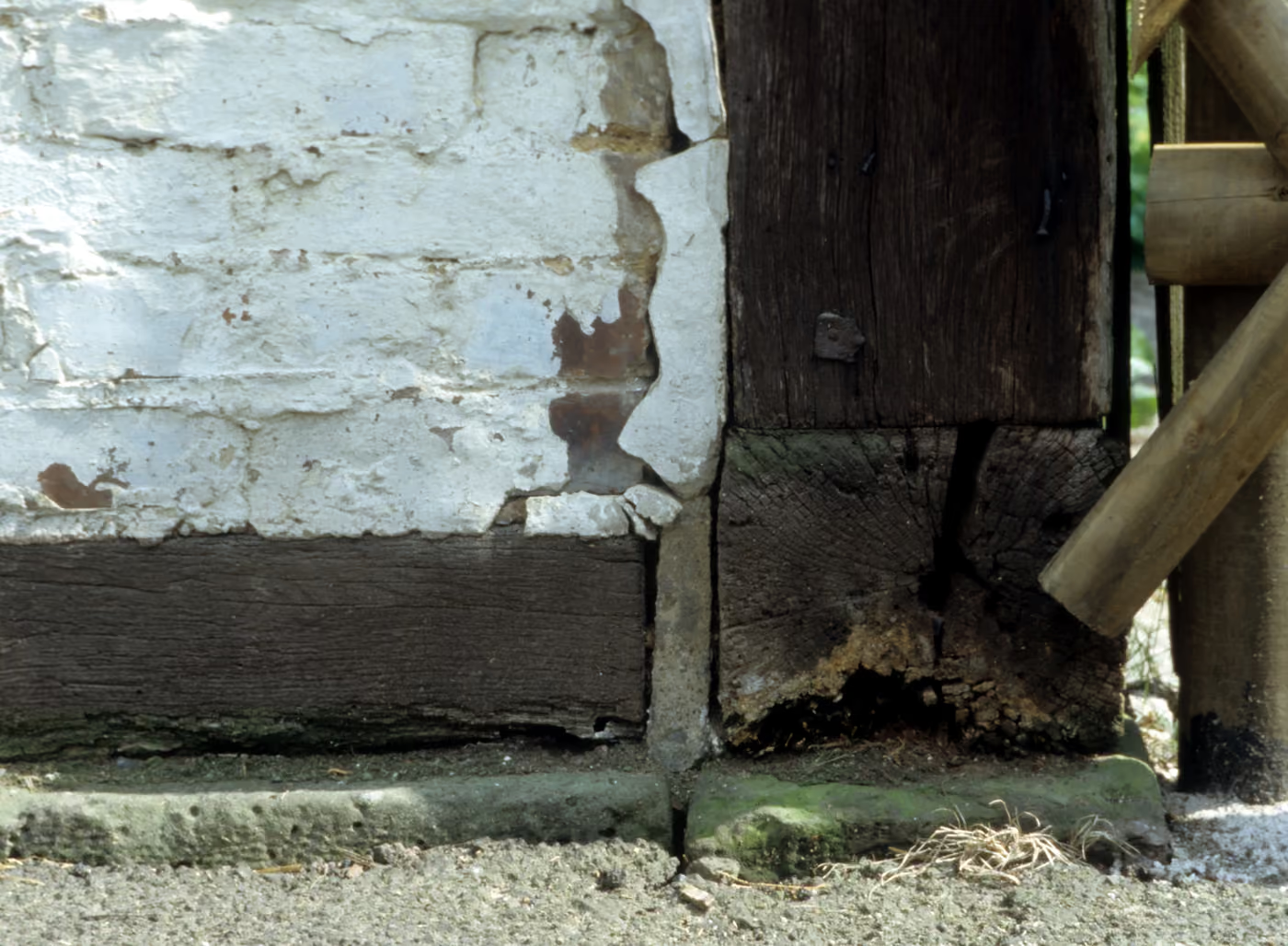

Wet rot is normally the cheapest of the three timber problems on this site to put right. It stays where the water is, so the repair is contained, and a lot of jobs are a few hundred pounds of joinery rather than a project. The number that catches people out is not the timber. It is the leak, the gutter or the flat roof that caused it.
Below are the ranges work of this kind usually lands in across the UK in 2026. They are ranges because they have to be. Nobody can price timber decay without seeing how far back the soft wood goes, and a firm figure offered over the phone is a figure that will change once somebody lifts a board.
Get it priced properly
Tell us what you are looking at and where it is. Not sure is a perfectly good answer.
Typical wet rot treatment costs
| Work | Typical range | What moves it |
|---|---|---|
| Single window sill repair | £200 to £600 | Cutting out the soft section, splicing or resin repairing, priming and painting. Ground floor and reachable off a ladder sits at the bottom. |
| Sash and case window repair | £400 to £1,200 | Bottom rail, sill and the foot of the box frame. Goes up with upper floors, scaffold or a tower, and cords and pulleys being renewed at the same time. |
| Joist end replacement, per joist | £150 to £400 | Splicing a new end on and supporting it off a hanger or plate. Per joist rates fall once several are done in the same visit. |
| Small area of floor | £600 to £1,800 | A few joists and the boards over them, typically a bathroom, a bay or the wall side of one room. Includes lifting and relaying boards. |
| Cellar or larger floor area | £1,500 to £4,000 | Multiple joists, sleeper walls or a full room. Restricted access and needing timber carried through the house pushes it up. |
| External door frame, bottom repair | £250 to £800 | Foot of the frame and the threshold. A close door or a communal entrance costs more because of the ironmongery and the security detail. |
| Flat roof or dormer cheek timbers | £900 to £3,500 | Deck and joists once the covering has failed. The roof covering itself is usually a separate trade and a separate bill. |
Ranges for the timber repair and making good. They do not include fixing the source of water, which is priced separately and is often the larger figure. Nothing here is a quote.
What actually drives the price
Six things move a wet rot job between the bottom and the top of its range, and only one of them is the fungus.
- How much timber has to come out. The single biggest factor. Decay is cut back to sound wood with a margin, and how far that is cannot be known from the surface. Two joists is a morning. Seven joists and the sleeper wall under them is a different job.
- Access. A ground floor sill reachable off a ladder and a third floor sash needing a tower or scaffold are the same repair at very different prices. Under a suspended floor, whether there is a crawl space or whether the whole floor has to be lifted changes the labour more than the materials.
- Repair against replacement. On windows this is usually the biggest decision. Splicing a new bottom rail and sill into an existing sash and case window is normally cheaper than a new unit, and on a listed building or in a conservation area it may be the only route that gets consent. Replacement only wins when the box frame and pulley stiles have gone too.
- Whether the cause is simple or structural. A leaking waste trap under a bath is an hour of plumbing. A failing flat roof, a cracked hopper on a shared downpipe or a slipped section of a tenement roof is a separate job with its own price, and on shared rainwater goods it is also a conversation with the other owners before it is a repair at all.
- Making good and decoration. Plaster, skirting, flooring, priming and painting. On small jobs this is routinely a third or more of the bill, and it is the line most often missing from the cheaper of two quotes.
- Drying time. Timber soaked for years does not dry in a weekend. Where a floor has to stay open, or ventilation improved and re-checked before new timber goes in, that is extra visits.
If the same wet rot keeps coming back, the money went to the wrong problem. Wet rot cannot live in dry timber, so a repair that rots again is not evidence of a bad joiner or a weak preservative. It is evidence that the water was never found, or was only partly fixed. Before you pay anybody to replace the same sill or the same joist end a second time, get the cause established first, even if that means paying for a survey you feel you should not need.
Where the real money usually goes
On a typical Scottish job the timber repair is the smaller half. A bottom sash rail is a few hundred pounds. The reason it rotted might be a failed lead flashing above it, and that is a roofer. A run of rotten joist ends along one wall of a ground floor flat is a manageable repair. The cause might be airbricks blocked by a neighbour's decking and a downpipe that has been discharging against the wall for a decade, and sorting both of those costs more than the joists did.
This is why a quote that prices only the timber can look like the cheapest and turn out to be the most expensive. It is worth asking for the cause and the repair as two separate lines, even if one of them says the work is somebody else's trade, because then you can see the whole number rather than half of it.
That split matters again if a policy is involved, because an insurer draws the line in almost the same place: it will look hard at a sudden leak and very little at the decay that followed slowly from a long standing one.How insurers treat rot claims is worth a read before you decide whether this is a claim or a bill.
What a wet rot quote should tell you
- How many joists, or how many linear metres of timber, are assumed
- What happens if more decay is found once the floor is open, and at what rate
- Where the water is believed to be coming from, in plain words
- Whether fixing that cause is inside the price or outside it
- Whether making good and decoration are included, and to what standard
- What any chemical treatment is for, and which timber it goes on
- A firm total given without anyone visiting the property
- A large chemical line with barely any joinery behind it
- A price that assumes the sill is the whole problem when nobody has probed behind it
Cheaper than the alternatives, and why that matters
Compared with the same square metre of dry rot, wet rot is inexpensive, because dry rot forces the work outward into timber and masonry that still looks perfectly sound. So the most valuable thing you can spend money on early is not treatment, it is knowing which one you have. Awet rot survey settles the identification and the extent, and it is the difference between agreeing a budget and guessing at one. If you are not sure which you are looking at, start withwet rot or dry rot, and thewet rot treatment page covers what the work involves.
Questions people ask
Why is wet rot cheaper to fix than dry rot?
Because it stays put. Wet rot only lives in timber that is genuinely wet, so the repair stops at the edge of the damp. Dry rot can carry water along its own strands and push through masonry to reach dry timber several metres away, which means the work has to reach past the visible damage into areas that look fine. That difference in scope is most of the difference in price.
Does the quote include fixing the leak?
Often not, and this is the single most common gap in a wet rot quote. A timber repair quote may cover the joinery and nothing else, leaving the roof, the gutter, the flashing or the plumbing to another trade. Ask directly whether the cause is inside the price. If it is not, get that priced before you agree to the timber work, because it is the part that decides whether the repair lasts.
Is it cheaper to repair a sash and case window or replace it?
Repair is usually cheaper and, in a conservation area or on a listed building, it may be the only option that gets consent. A rotten bottom rail and sill can be spliced for a fraction of the cost of a new sash and case unit, and the surviving timber in an original window is often better than anything you would buy today. Replacement makes sense when the rot has reached the pulley stiles and the box frame throughout.
Why do two quotes for the same wet rot differ so much?
Usually because they are not quoting the same job. One may assume two joist ends and the other five, one may include making good and decoration and the other stop at bare timber, and one may include chemical treatment the other has decided is unnecessary. Ask each for the number of joists or the linear metres of timber assumed, and the quotes become comparable.
Do I need to move out while wet rot is treated?
Rarely. Most wet rot work is confined to one room or one window and you can live around it. Where the floor of a main room or a hallway is lifted, or where the work is above a ceiling that has to come down, the room is out of use for a few days rather than the house.
Will insurance pay for wet rot?
Buildings insurance generally does not cover rot itself, because it is treated as gradual damage rather than a sudden event. It may cover the escape of water that caused it, and the resulting damage, if the leak was sudden and you reported it promptly. It is worth checking the policy wording before you assume either way, and worth reporting a burst or an overflow at the time even if you cannot see damage yet.
Get it priced properly
Tell us what you are looking at and where it is. Not sure is a perfectly good answer.