Surveys
Dry rot survey
A dry rot survey is really a survey for water. You cannot stop the fungus without finding what wetted the timber, so that is what the visit is mostly spent doing.
- Intrusive, not a walk roundBoards up where the readings say so
- Written report either wayYours whether you book work or not
- One visit, either side of the countryA team for the West and a team for the East
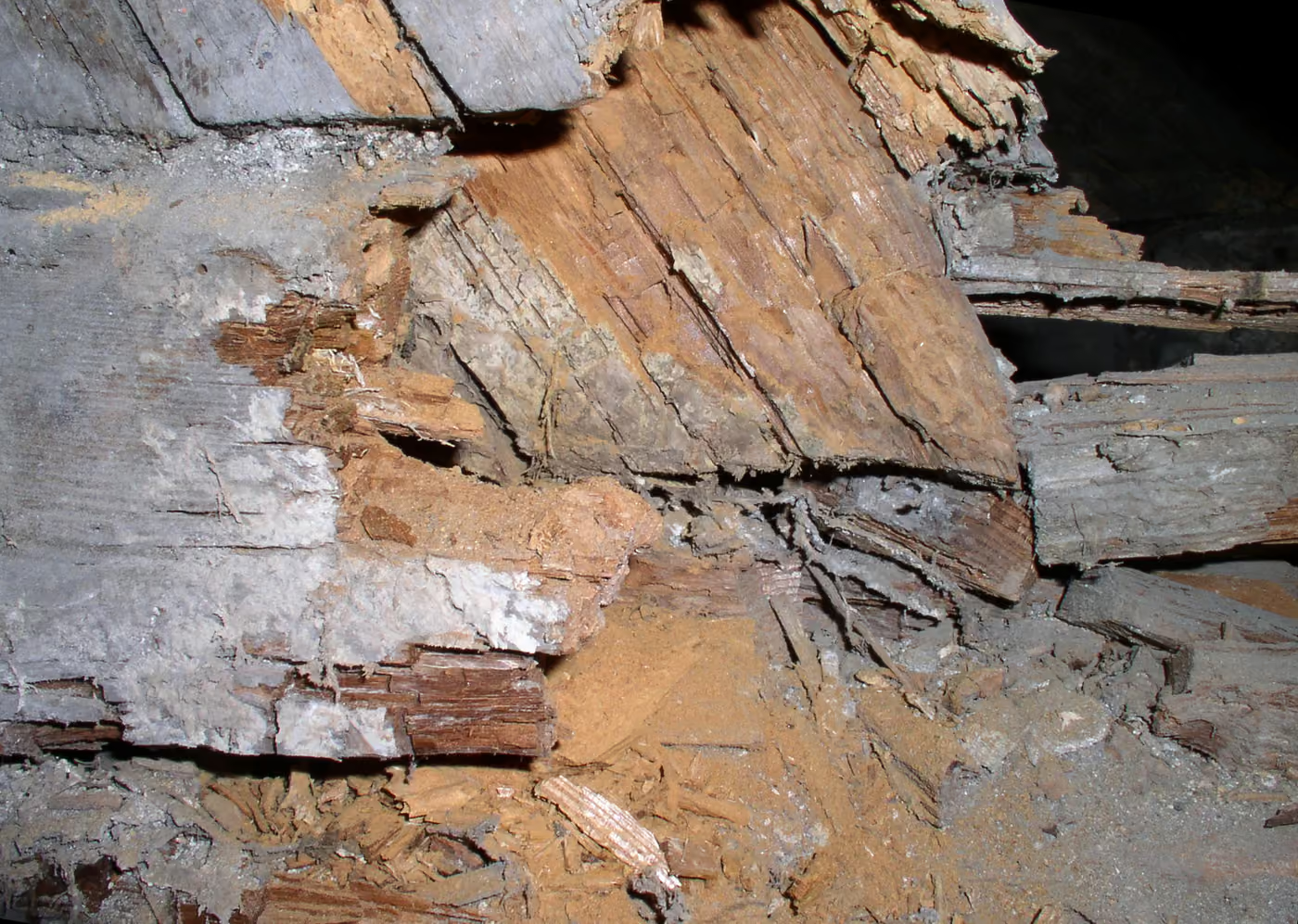

Almost everybody books a dry rot survey to answer the question is it dry rot. That question is usually settled in the first ten minutes, by the strands, the smell and the way the timber has cracked. The rest of the visit goes on the question that actually decides what the repair costs and whether it lasts: where did the water come from, and is it still coming.
That is not a technicality. Serpula lacrymans establishes in timber at around 20 per cent moisture content and then keeps itself going by conducting water along its own strands, which is how it crosses masonry into rooms that have never been wet. Kill the water supply and it cannot expand. Leave the water running and no amount of new timber or fungicide will hold. So a survey that names the fungus but shrugs at the cause has answered the easy half.
A good survey tells you four things: what it is, how far it has gone, what wetted the timber, and what it will take to put right. Everything below is how a surveyor arrives at those four answers.
Book a dry rot survey
Tell us what you have seen and where. Not sure is a perfectly good answer.
What happens on the visit
- A conversation before anything is opened. When you first noticed it, what the room smells like, what the weather was doing, whether anything has leaked or been repaired, and whether anyone below or above has had work done. Owners routinely know the cause without realising it, in the form of a stain that appeared one winter and dried out again.
- The outside first, on most visits. Gutters, downpipes, hoppers, roof edges, flashings, a valley, a chimney head, cracked render, the state of the pointing and where ground level sits against the wall. Most dry rot in Scottish property is caused by something outside the flat that has been failing quietly for years.
- Moisture readings, taken widely. A pin meter in timber and a surface meter across walls, working outwards from the affected area until the readings drop away. The pattern of readings is what draws the boundary of the work. A single reading at the wet spot tells you almost nothing.
- Opening up. Floorboards lifted at the wall, a section of skirting off, a hatch into the void, sometimes a small hole in plaster where the strands are heading. This is the part people dread and it is the part that makes the report worth having. Extent cannot be estimated from a surface.
- Following the growth rather than the damage. Strands are traced to see where they run, because they head towards drier timber and away from the leak. Where they cross a wall the surveyor needs to know which side they came out on.
- Checking what else is going on. Wet rot in the same floor is common and much cheaper to fix, woodworm turns up in the same voids, and more than one problem in the same floor is normal rather than unlucky. All of that belongs in the report, including the parts that are not urgent.
- Putting the property back. Boards down, skirting refixed, and a straight verbal summary before anyone leaves, so you are not waiting days to find out whether to worry.
For a typical flat that is two to three hours. A tenement where the cause is three floors up, or a house with a cellar and a suspended floor, takes longer and occasionally needs a second visit with access equipment.
Where the water usually turns out to be coming from
There are only so many ways water gets into a Scottish building, and the same handful come up again and again.
- A failed downpipe or cracked hopper. The classic. Water runs down the face of the stone rather than through the pipe, soaks the wall, and finds the joist ends built into it. From the street it looks like nothing at all until you see the staining on the sandstone.
- A blocked or back-falling gutter. Often full of moss or slates, often shared, often nobody's job. It only overflows in heavy rain, which is why it goes unnoticed for years and why Scottish autumns matter here.
- A leaking waste or supply pipe. A bath waste that only leaks when the bath empties, a WC pan connector, a boxed-in pipe under a kitchen unit. Small volumes, but they never stop.
- Penetrating damp through solid sandstone. On an exposed elevation with soft or eroded pointing, driven rain can push right through a solid wall. There is no cavity to stop it and no damp proof course to hold it back at the base.
- A bridged damp proof course, where one exists. Later concrete, a raised path, decking, a flowerbed or an added render coat can carry moisture straight past a DPC. Blocked airbricks belong in the same category, because they turn a floor void into a still, humid box.
- Roof and dormer failures. A slipped slate, a failed valley, a rotten dormer cheek or a chimney with no lead where it meets the roof, each of which can wet a wall head and travel down inside it.
A fair number of surveys end with nothing much to do. Old, dead growth in a floor void from a leak that was fixed years ago is a genuinely common finding, and if the timber is still dry and structurally sound the right advice is to leave it alone, improve the ventilation and keep an eye on it. Nobody enjoys paying for a survey that ends in do nothing, but that is a result worth having, and it is the reason to book somebody who is willing to reach that conclusion out loud.
What the report contains
A specialist timber report is not a page of paragraphs saying dry rot was observed. It should contain, at minimum:
- What was found and where, room by room, with photographs
- The fungus identified, and it should say why it was identified as that
- Moisture readings, with locations, so the extent is evidenced rather than asserted
- The cause, or the suspected cause with a way to confirm it
- What was opened up, and just as importantly what could not be inspected
- The recommended work in a sequence, with the water first
- An indication of cost, or a separate quote referencing the same findings
- Anything else noticed, including wet rot and woodworm
The limitations section matters more than people expect. No surveyor can see inside a wall or under a fixed floor that was not lifted, and a report that pretends otherwise is overreaching. Naming what was not inspected is what makes the rest of it credible.
What a lender or a home report follow-up wants to see
If a Scottish home report has flagged dampness or timber decay, or a lender has made a retention pending a specialist timber report, they are looking for specific things and a vague report will bounce back. They want the problem identified, the extent stated, the cause established, the remedial work specified, and a cost attached to it, ideally with a guarantee referenced. Where a retention has been applied, the lender generally wants written confirmation once the work is complete, so it is worth checking at the outset that the firm doing the work will issue that.
If you are buying, get the survey done before the deadline rather than after the offer, because the extent of dry rot is a negotiating fact and it stops being one after conclusion of missives. If you are selling, having a report and a quote already in hand is usually worth more than the cost of getting them, because it replaces a buyer's worst-case imagination with a number.
Booking one
Tell us what you have seen, which room, and roughly when it started. If there is a smell, say so, and if you have a photograph of a fruiting body or a strand it saves a lot of guessing. You do not need to know whether it is dry rot. That is what the visit is for, and a good share of what gets reported to us as dry rot turns out to be wet rot, which stays where the damp is and is usually much cheaper to put right.
If you already know what you are dealing with and want to understand the work itself, the dry rot treatment page sets out what a repair involves, anddry rot treatment cost covers the figures. If nothing has been identified yet and you simply want a property looked over, a timber survey covers rot and woodworm in one visit.
Questions people ask
What is the difference between a dry rot survey and a timber survey?
A timber survey looks at rot and woodworm together across a property and is the usual starting point when nobody knows what is there. A dry rot survey is targeted: something has already been found or suspected, and the visit is about extent and cause rather than discovery. In practice many surveys start as one and become the other.
Will the surveyor damage my house?
There will be some opening up, because that is the point of the visit. Expect a few floorboards lifted, a section of skirting off, small holes drilled for a deep moisture probe and occasionally a patch of plaster removed where strands are heading into a wall. It should be discussed with you before it happens and it should be the minimum that answers the question.
What does a moisture meter reading actually mean?
A pin meter reads the electrical resistance between two points in timber and converts it to a rough moisture content. Under about 18 per cent, decay fungi cannot get going. Around 20 per cent and above, dry rot can establish. Readings on masonry are far less precise and are used to compare one part of a wall against another rather than as an absolute figure.
Do I need a survey if the home report already mentioned dampness?
Usually yes. A home report notes a concern and recommends further investigation, which is exactly what a specialist survey is. Lenders asking for a timber report want the extent, the cause and a costed remedy, none of which a home report is designed to provide.
How long does the report take to arrive?
Commonly two to five working days. If you are working to a purchase deadline, say so when you book, because the timing is often the whole reason the survey is being done and it can usually be prioritised.
Can the surveyor find the leak if it is not leaking on the day?
Sometimes not, and an honest report says so. Rain from one direction, a gutter that only overflows in a downpour and a waste pipe that leaks only when a bath drains are all real and all invisible on a dry Tuesday. Where the cause cannot be confirmed on the day, the report should say what is suspected, how to test it and what to watch for.
Book a dry rot survey
Tell us what you have seen and where. Not sure is a perfectly good answer.