Telling them apart
Wet rot vs dry rot, and how to tell which one you have
One of these two spreads through masonry into timber that was never wet. The other stays exactly where the water is. Working out which you are looking at decides the size of the job, so it is worth doing before anybody quotes.
- Identified before it is pricedThe name of the fungus changes the quote
- You get the finding in writingIncluding where the water is coming from
- Central Belt onlyTwo teams, West and East

Most people arrive at this question the same way. A board comes up, a skirting gets pulled back, or a carpet gets lifted before a decorator starts, and underneath is timber that is soft, dark, or crumbling in a way that is clearly not right. The instinct is to search for treatment. The better first step is identification, because the two rots are not two versions of the same problem. They behave differently, and one of them does something the other cannot.
The single most important difference is whether it spreads beyond the damp. Wet rot, usually Coniophora puteana, the cellar fungus, stays where the water is. It rots the timber it is sitting in, and when that timber dries out, it stops. Dry rot,Serpula lacrymans, is the only timber decay fungus in Britain that can carry water along its own strands and push through masonry, plaster and mortar to reach timber several metres away that was never wet in the first place. That is why a wet rot repair is usually about the size of the damage you can see, and a dry rot repair almost never is.
Everything below is arranged so you can work through it with a torch in your own house. If you get to the end and are still not sure, that is a normal outcome rather than a failure, and the last section says what to do about it.
Book a survey
Three questions. You do not need to know which problem you have.
Wet rot and dry rot side by side
This is the comparison in one place. Read the second row first, because it is the one that decides what the job actually is.
| Dry rot | Wet rot | |
|---|---|---|
| The fungus | Serpula lacrymans, one species, which is why it behaves so predictably once you know what you are looking at. | Usually Coniophora puteana, the cellar fungus, though several other species cause much the same damage. |
| Does it spread beyond the damp | Yes. It conducts water along its own strands and travels through masonry, plaster and behind panelling into dry timber. This is the difference that matters most. | No. It stays in the wet timber and dies once that timber dries. Fix the water and you have largely fixed the fungus. |
| Moisture it needs | Around 20 per cent moisture in the timber to establish, after which it can keep itself going in conditions drier than that. | Wetter, and it needs the wet to continue. Persistently damp timber, a live leak, standing water, or ground contact. |
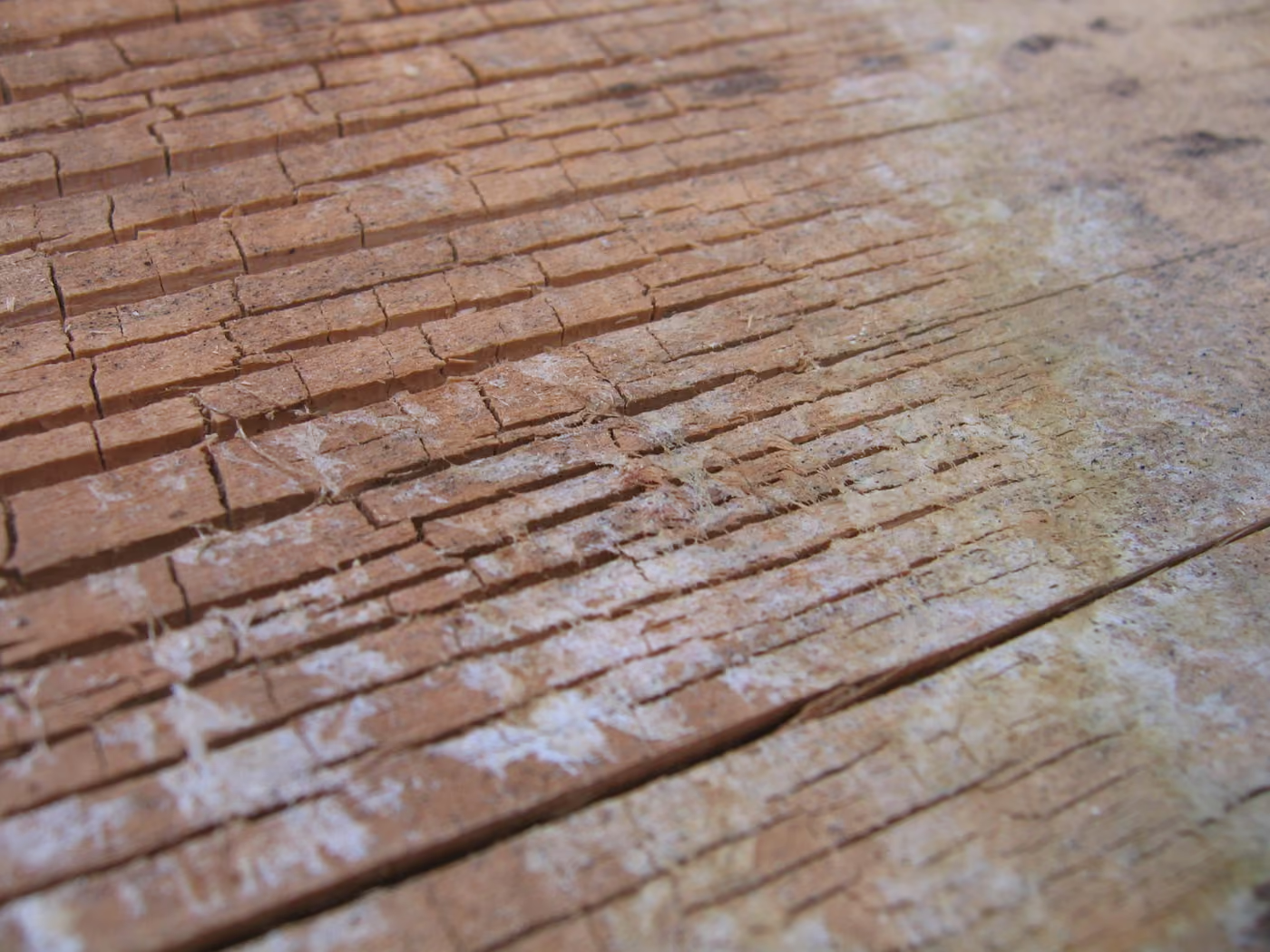
| The timber itself | Dry, light, brittle. Cracked into rough cubes across and along the grain at once, and often shrunken away from the wall or the joist beside it. | Darkened, soft, often spongy while wet and stringy or fibrous when poked. Cracking runs mainly along the grain rather than into cubes. |
| Growth you can see | White or grey cotton wool mycelium, sometimes a silver grey skin tinged with lilac or yellow, brittle grey strands up to about pencil thickness, and a flat red-brown fruiting body. | Much less to see. Thin dark brown or black strands lying flat on the surface, occasionally a thin olive to brown sheet. Frequently no visible growth at all. |
| Spore dust | Rust or brick red dust settling on skirtings, sills, floors and the surrounding masonry. It is often the first thing anybody notices. | Rarely any to speak of, and nothing that leaves a coloured film across a room. |
| Smell | Musty and mushroomy, strongest in a shut cupboard, a cellar or a room that has been closed up for a while. | Wet, earthy, cellar-like. It reads as damp rather than as fungus. |
| Where it usually turns up | Joist ends built into solid sandstone walls, under suspended floors, behind lath and plaster, in cellars and basements, and in closed spaces with poor ventilation. | Window sills and sash boxes, the bottom of door frames, joist and rafter ends directly under a leak, under a bath or a sink, and flat roof timbers. |
| How urgent | Urgent. Every month it is left, the area that has to be opened up and treated tends to get larger, and the cost follows it. | Less urgent once the water is stopped, though the structural damage already done does not repair itself. |
| What it typically costs | Rarely a small job. The repair follows the fungus rather than the visible damage, so opening up, masonry treatment and structural timber replacement usually put it into four figures and sometimes well past. | Often the cheapest of the three timber problems to put right. A sill or a door frame can be a modest repair. A whole floor over a wet void is not. |
How to tell in your own house
You need a torch, ideally a bright one you can hold at a low angle rather than pointing straight at the timber, and something to prod with. A screwdriver or a bradawl is fine. Work through these in order.
Look at the way the timber has cracked
This is the most reliable thing an untrained eye can use. Dry rot cracks wood into cubes. The splits run both across the grain and along it, so the surface breaks into rough blocks anywhere from a few millimetres to a few centimetres across, and the whole piece often looks shrunken and dried out. Wet rot cracks mainly along the grain, in long splits, and the timber stays dark and feels soft rather than brittle. Hold the torch almost flat against the surface and the pattern shows up far better than it does under direct light.
Feel what the timber does when you press it
Wet rot in an active state is soft and gives under a screwdriver like damp cork, and when you pull the point out it brings away dark, stringy fibres. Dry rot damaged timber is lighter than it should be, and it tends to crumble or break into blocks rather than compress. Weight is a genuinely useful signal. A short offcut of decayed timber that feels like balsa when it should feel like pine has usually lost a great deal of its strength, whichever fungus did it.
Look for growth, strands and dust
Dry rot leaves evidence that wet rot does not. White or grey growth like cotton wool, sometimes with a silvery skin over it, means dry rot until proved otherwise. So do brittle grey strands running across masonry, plaster or the back of a skirting, which can be anything from thread width to about the thickness of a pencil. So does a flat, fleshy, red-brown fruiting body, usually with a paler rim. And so does rust-red dust settled on the floor, the sills or the top of a skirting, because that is spore dust and it means the fungus has been established long enough to fruit. Wet rot generally offers none of this. It offers dark, soft timber and not much else.
Use your nose on the first breath
Open the cupboard, the hatch or the cellar door and pay attention to the first two or three seconds. Dry rot smells mushroomy, which is different from the flat, earthy smell of ordinary damp. Your nose adjusts quickly, so the impression you get standing there for a minute is much less useful than the one you get walking in.
Then find the water
Neither fungus starts without it, so the last question is where it came from. Look above and outside the damage rather than at it. In Scottish tenement stock the usual culprits are a cracked hopper or a blocked shared gutter running down the same patch of wall for years, a joist end sitting in solid masonry with no cavity and no damp proof course between it and the weather, an airbrick blocked by a flowerbed, decking or a later extension so the floor void never dries, or a failed paint line on a sash and case window letting water into the sill. If you can identify the water, you are most of the way to knowing whether the timber will dry out, and that in turn tells you a lot about which fungus is likely to be sustaining itself in there.
Some cases genuinely cannot be told apart without opening up.Decayed timber with no growth visible, no fruiting body and no spore dust, which is exactly what a joist end in a solid wall tends to give you, can be either one. Advanced dry rot in a well ventilated space can lose its distinctive appearance, and old wet rot that dried out years ago can look alarming while being completely dead. If you have worked through the list and you are still not sure, you have not missed something obvious. That case needs a small area opened up and a moisture reading, and anybody claiming to settle it from a photograph is guessing.
Why calling dry rot wet rot is the expensive mistake
The two errors are not equally costly. Treating wet rot as though it were dry rot means you have paid for more opening up and more masonry treatment than the job needed. That is money wasted, and it is annoying, but the problem is over.
Treating dry rot as though it were wet rot means somebody has cut out the soft timber, put new timber in, replastered and painted, and left the fungus alive in the wall behind the repair. It carries its own water, so it does not need the original leak any more. It keeps going behind new plaster, and it reappears a year or two later somewhere that looks unrelated: the other side of the wall, the next room, the floor above. By that point the repair you just paid for has to come out again.
That is the entire reason this page exists, and the reason a competent survey spends its time tracing where the fungus has been rather than measuring the patch you found.
What to do next
If the evidence points one way, read the page for that problem. If it does not, the survey page is the sensible next step, because a visit that identifies the fungus and finds the water is what everything else depends on.
- Cuboidal cracking, white or grey growth, brittle strands, red dust or a mushroomy smell: read dry rot treatment, and expect the work to reach further than the damage.
- Dark, soft, stringy timber at an obvious source of water, with nothing growing on it: read wet rot treatment, where fixing the water is most of the job.
- Not sure, or the damage is somewhere you cannot see properly: atimber survey covers both rots and woodworm in one visit, which is how most of these start.
One last thing worth saying plainly. A fair share of what we get called out to turns out to be old damage from a leak that somebody fixed years ago, sitting there dry and dead and doing nothing. Establishing that is a perfectly good outcome, and it is a great deal cheaper than finding out after the timber has come out.
Questions people ask
Is dry rot worse than wet rot?
In almost every case, yes, and the reason is spread rather than severity. Wet rot destroys the timber it is sitting in and stops when that timber dries out. Dry rot can carry water along its own strands and push through masonry into dry timber somewhere else, so the repair has to follow it rather than simply replace what you can see.
Can I tell wet rot from dry rot without opening anything up?
Sometimes. A soft, dark, stringy window sill under a failed paint line is almost always wet rot, and a red-brown fruiting body with rust-coloured dust around it is almost always dry rot. The awkward middle ground is decayed timber with no growth visible, which is common at joist ends, and that genuinely cannot be settled without lifting a board or opening a small area of wall.
What does dry rot smell like?
Damp, musty and mushroomy, closer to a mushroom left in a bag than to ordinary damp. It is strongest in a closed space such as a cupboard, a cellar or a room that has been shut up, and it often fades within a minute or two of you standing in it, so the first breath through a newly opened hatch is the useful one.
Why is it called dry rot if it needs water?
Because of how the timber ends up rather than how it starts. Dry rot needs damp timber to get going, around 20 per cent moisture, but it then leaves the wood dry, light, brittle and cracked into cubes. The name describes the wreckage, not the conditions, and it misleads a lot of people into thinking dry rot can appear in a dry house for no reason.
Does wet rot come back after treatment?
Only if the water does. Wet rot fungi need the timber to stay wet, so once the leak is fixed, the timber dries and the fungus dies. That is why a wet rot quote that is all about chemicals and says nothing about where the water came from is worth questioning.
I have found rot in a flat. Do my neighbours need to know?
Usually yes, and earlier than feels comfortable. In a Scottish tenement the roof, gutters, downpipes and often the close itself are shared, so the water feeding rot in your ceiling or wall is frequently a common repair rather than yours alone. Fixing the timber without fixing the shared defect just resets the clock.
Book a survey
Three questions. You do not need to know which problem you have.