Surveys
Wet rot survey
Finding how far the soft timber actually goes, and what wet it, before anybody puts a number on the repair.
- Opened up, not glanced atBoards lifted where it matters
- A written report either wayYours whether you go ahead or not
- Central Belt onlyTwo teams, West and East
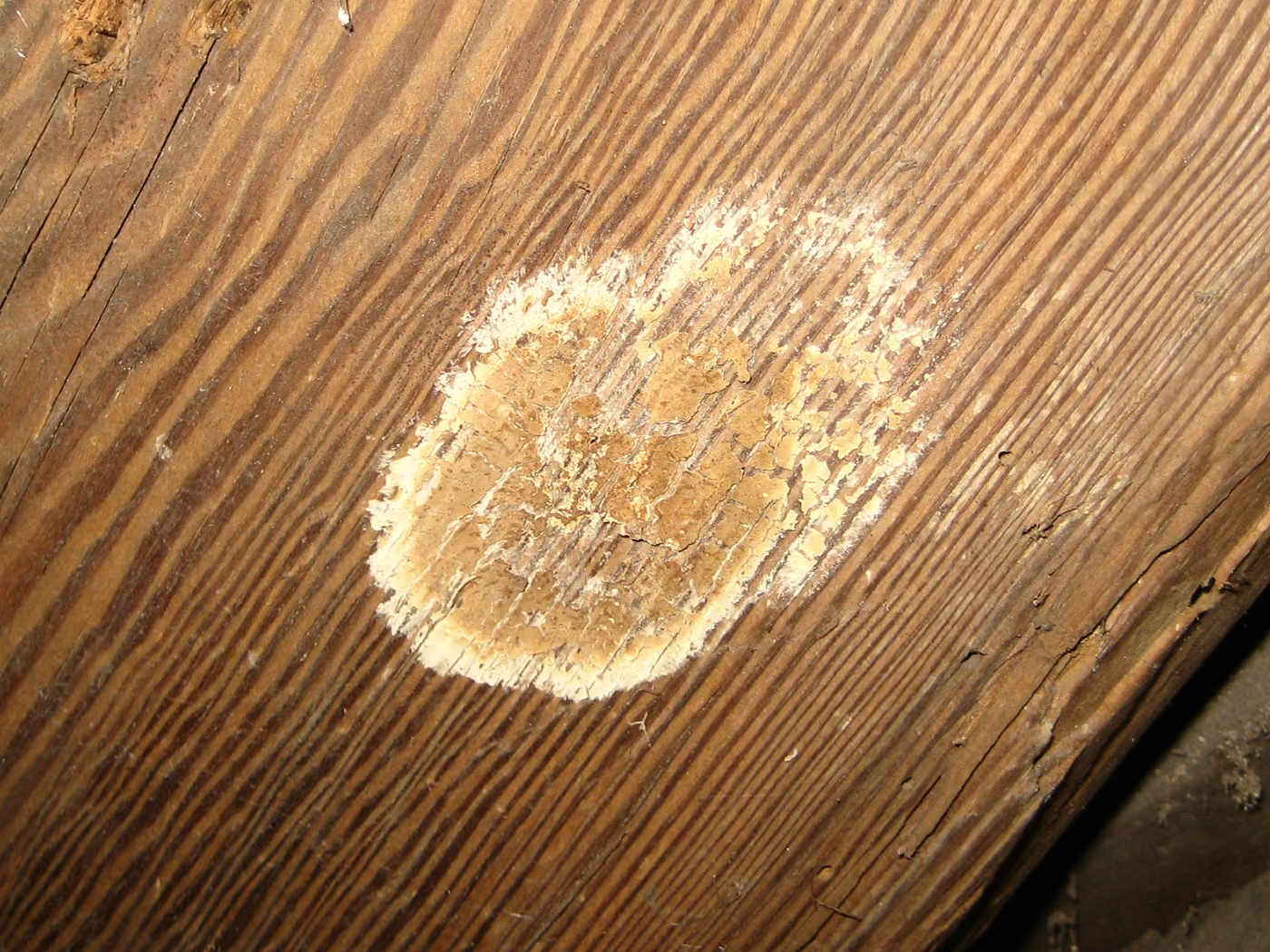

A wet rot survey answers two questions that nobody can answer by looking: how far the decay actually goes, and what is keeping the timber wet. Until those are settled, any price you are given is a guess, and you have no way of telling a careful quote from an optimistic one.
It is a short, physical piece of work. Somebody comes out, opens up enough to see the timber properly, probes it, takes moisture readings, traces the water back to where it is getting in, and writes down what they found. You get that in writing whether or not you go ahead with any work.
Book a wet rot survey
Three questions. You do not need to know which problem you have.
Where is the property?
We work as two teams. Pick the side of the country you are on and you will get the one that covers it.
Why the extent matters more than the diagnosis
Most people booking a survey already suspect they have rot. What they do not know is how much. That matters because wet rot damage is nearly always bigger than the part you can see, and for a completely mundane reason: the wet part of a piece of timber is larger than the stained part, and the weakened part is larger than the soft part.
A window sill that looks like a six inch problem at the corner can be soft for a third of its length once the paint comes off. A joist that seems fine where it crosses the room can be fibrous and load-shedding at the end buried in the wall. Agreeing a budget before anyone has established which of those you have is how a five hundred pound repair becomes a two thousand pound one halfway through, with the work already open and no room to argue.
Establishing which rot it is, before anyone prices anything
The first thing worth settling is whether it is wet rot at all. Wet rot, usually Coniophora puteana, stays in the damp timber and dies once that timber dries. Dry rot, Serpula lacrymans, is the only timber fungus in the UK that spreads through masonry and conducts water along its own strands to reach dry timber several metres from where it started. The repairs are not the same size, not the same order of work, and not the same price.
So the surveyor is looking at more than the soft patch. Grey or white sheeting on the back of a skirting, fine orange dust on a sill, cube shaped cracking across the grain rather than long splits along it, and a musty mushroomy smell all point away from wet rot. Getting that call right is the highest value ten minutes of the visit. If you want the differences in detail before anyone comes out, our page onwet rot or dry rot sets them out.
What happens on the visit
- A look at the whole picture first. Outside as well as in. Gutters, downpipes, hoppers, flashings, the ground level against the wall, airbricks and whether anything has blocked them. In a tenement that includes the shared rainwater goods, because a cracked hopper two floors up is a common cause of a wet joist end on the floor below.
- Probing with a bradawl. A bradawl or a small screwdriver is pushed into the timber at intervals. Sound wood resists and the point stops. Decayed wood takes it with almost no pressure. Working along the timber this way finds the boundary between soft and sound, which is the line the eventual repair is cut back to. It is low technology and it is the most reliable thing done on the visit.
- Moisture readings. A meter is used across the timber and the adjoining wall to establish whether the damp is current or historic. Dry timber in an ordinary heated home reads around 10 to 14 per cent. Readings above roughly 20 per cent are high enough for decay to continue, and a wet joist end can read far higher than that. Readings that fall away sharply as you move from the wall tell a very different story from readings that stay high across a whole floor.
- Opening up where it is needed. A board or two lifted near the suspected damp, a section of skirting eased off, a sill nosing removed. This is agreed with you first and kept to the minimum that answers the question, but a survey that never opens anything is a survey that can only report what you already saw.
- Tracing the water back. The point is not to record that timber is wet. It is to establish why. A waste pipe under a bath, a failing flat roof, a slipped slate, a rendered-over wall trapping moisture, decking laid across an airbrick. Without this the report is a description rather than a plan.
- Writing it up. What was found, where, how far it runs, what caused it, what needs doing and in what order.
A survey cannot see through a wall, and it is worth knowing that. Where a joist end disappears into solid sandstone, or where a floor cannot be opened without taking up a whole room, the report will say what is likely and say plainly that it is an inference. Anyone who tells you the exact extent of decay inside a masonry wall pocket without exposing it is telling you something they cannot know. The honest version is a stated assumption plus an agreed rate if more is found, which is also the version that stops a quote drifting once the work starts.
What the report gives you
- Which fungus it is, or a clear statement that identification needs more exposure
- Whether the decay is active or historic, with the readings behind that call
- How far the affected timber runs, and where it was probed
- The source of the water and what has to happen to stop it
- The remedial work described in an order that makes sense
- What was not accessible, so nobody pretends the whole picture is known
That document does more than justify a repair. It is what you hand to another contractor to get a comparable quote, what you show a lender or a solicitor when a Scottish home report has flagged timber decay, and what you put in front of the other owners in a tenement when the fault is in something shared and nobody wants to be the one who pays for it.
When a survey is worth it and when it is not
If you have a single ground floor window sill, the cause is a cracked bead you can see, and a bradawl tells you the softness stops within a few inches, you probably do not need anybody. Get a joiner. The survey earns its money when the timber is holding something up, when you cannot find the water, when the same repair has failed once already, or when two quotes for the same job are hundreds of pounds apart and you cannot work out why.
Once the extent is known, the wet rot treatment page covers what the work involves, and thecost page sets out the ranges repairs of that size usually land in. If you are not sure yet whether the problem is rot, woodworm or both, a timber survey covers the lot in one visit, which is how most of these actually start.
Questions people ask
How long does a wet rot survey take?
For one window or one room, half an hour to an hour. For a suspended floor where boards have to come up, or a cellar with several bays of joists, two to three hours is more typical. The time goes on opening up and probing rather than on looking, because the extent of soft timber is the answer the survey exists to produce.
What is a normal moisture reading in timber?
Internal joinery and floor timbers in a dry, heated Scottish home usually sit somewhere around 10 to 14 per cent. Anything above roughly 20 per cent is wet enough for decay fungi to establish and keep going, and readings in the high twenties or above in a joist end or a sill mean water is still arriving. A single high reading is a prompt to look harder, not a diagnosis on its own.
Will the surveyor need to lift floorboards?
Sometimes, and it is worth allowing it. Wet rot in a floor starts at the joist ends against the wall, which is the part you cannot see from the room. Boards are lifted in one or two places, usually near the suspected damp, and put back. Where a hatch or an accessible void exists, that is used instead.
Do I need a survey if I can already see the rot?
If it is a single window sill you can probe yourself and the cause is obvious, probably not. The survey earns its money when the timber is structural, when you cannot find the water, when you are not certain it is wet rot rather than dry rot, or when quotes you have been given differ so widely that you cannot tell what is actually being priced.
Does the survey say who has to fix the leak?
It says where the water is coming from and what needs to happen to stop it. In a Scottish tenement, where roofs, gutters, downpipes and hoppers are shared, that report is often the document that gets the other owners to agree something is wrong, which is a large part of why it is worth having in writing.
Is a wet rot survey the same as a home report timber inspection?
No. A home report is a general survey of the whole property and will flag suspected timber decay without establishing what it is or how far it goes. A wet rot survey is the specialist follow-up: identification, extent, cause and remedial work described. It is usually what a lender means when it asks for a specialist timber report.
Book a wet rot survey
Three questions. You do not need to know which problem you have.