Edinburgh wet rot
Wet rot treatment in Edinburgh
On this coast the classic wet rot job is a window. Sash and case joinery, stone sills and dormer cheeks take driven rain off the Forth on whichever elevation faces the weather, and they take it for months at a time.
- Survey first, price secondNobody can quote blind
- Report in writingUsable in a home report query
- East of Scotland onlyLothians, Fife and Borders
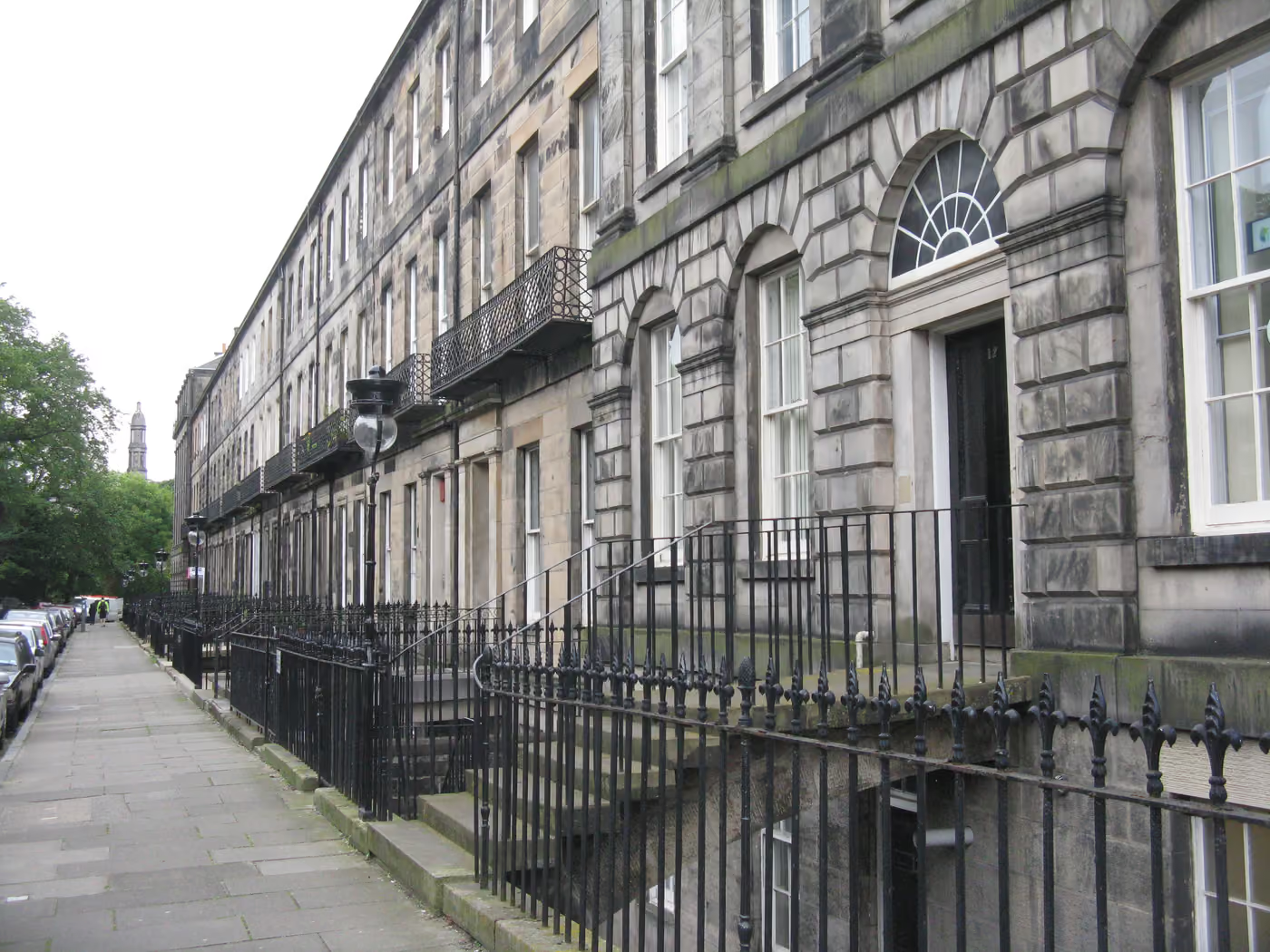
Edinburgh has a density of surviving sash and case windows that few cities in Britain can match. Whole streets of them in Marchmont, Bruntsfield and the New Town, more in the Leith and Portobello tenements, and a long tail through Musselburgh, Linlithgow, the Fife burghs and the Borders towns. Most are between one hundred and two hundred years old, most are original or close to it, and every one of them is a timber box sitting in a hole in a wet stone wall.
That is where the eastern team meets wet rot. Not in dramatic circumstances, usually: a bit of soft timber at the bottom of a sash, a stain under a sill, a window that has stopped sliding. What the biology is doing is covered on thenational wet rot page. This page is about the joinery and the weather that reach it.
Book a survey
Three questions. You do not need to know which problem you have.
Where a sash and case window goes first
Almost always the bottom. Water runs down the glass, sits in the angle where the pane meets the timber, and works into the joint at each end of the bottom rail where it meets the stile. Old linseed putty shrinks and lets it in behind the glass. Paint fails first on the horizontal surfaces because that is where the water stands. The lower sash takes far more of this than the upper one, which is why so many Edinburgh windows are perfectly sound above the meeting rail and soft below it.
Behind the sashes, the case is the part people forget. The box that houses the weights is built into the stone reveal, and its outer lining sits directly against masonry that gets wet. Rot in the pulley stile or the lining will not show from the room at all until something jams or a cord breaks. Below everything sits the timber sill, and beneath that the stone.
- Bottom rail of the lower sash, especially at the joint with the stile
- Putty line and the glazing rebate, where water gets in behind the glass
- The timber sill and its nosing, which take the run off from the whole window
- The case linings and pulley stiles, hidden inside the reveal
- Astragals on multi pane windows, which trap water at every junction
Stone sills, and why the stone rarely is the problem
A sandstone sill is meant to throw water clear of the wall below it, which is what the drip groove cut into the underside is for. Two centuries of weathering wears that detail away, and a century of repointing frequently fills it with hard cement. Cement does not move with the building, so it cracks, and a crack in a sill joint is a route for water to run backwards into the opening instead of away from it.
From inside, the stain appears at the stone, so the stone gets blamed. The decay is in the timber it is feeding: the sill above it, the ends of the case, the bottom of the lining. Repointing in lime and clearing the drip detail is often as much a part of the repair as anything done to the wood, and skipping it is how a repaired window becomes a rotten one again in five years.
Dormer cheeks and box dormers
Attic conversions have been going into Edinburgh tenements and terraces for a very long time, and the box dormer is the standard result: a flat roofed projection with two vertical cheeks, clad in lead, zinc, slate or render, with a window in the front. Structurally it is a timber frame sitting on a roof, and every joint in that cladding is a potential entry point.
Lead splits at a fold or lifts where fixings have worked loose. Slate cheeks lose a slate and nobody sees it from the street. Felt on the flat top perishes at the upstand. The water then runs into framing that has no ventilation behind it and no way to dry, which is exactly the condition wet rot needs. Because none of it is visible, the first sign is usually internal: a damp patch at the head of the reveal, a soft window board, or paint lifting in the corner of the room below.
Which elevation gets it
Rain here does not fall so much as arrive. A wind driven shower off the Forth hits one face of a building hard and leaves the others largely dry, and the elevation that catches least winter sun stays wet for hours after the shower passes. That is why decay in Edinburgh property is so often patterned rather than random. Every window on one face wants attention and the identical windows round the corner are sound.
Exposure changes the picture again nearer the water. A front elevation in Portobello, on the Fife coast or at North Berwick takes salt as well as rain, and salt laden air is unkind to paint. Coatings that would last eight years inland can be failing in four, and once the paint film is open the timber is taking water directly. Inland, at Peebles or Galashiels, the same buildings behave differently again, with the sheltered elevations tending to stay damp longer through a still, wet autumn.
Plenty of this is genuinely a job you can handle. Two or three soft inches at the end of a bottom rail, caught early, is a scrape back, a hardener and a filler, then a proper paint system, and a competent person can do it over a weekend for the price of a tin. Keeping the paint intact on the elevation that gets the weather will prevent more wet rot than any treatment will ever cure. Call somebody when the softness goes deep, when the sash has dropped or the joints have opened, or when the decay is in the case rather than the sash, because at that point the window has to come apart.
Why the repair is joinery, not replacement
In much of the country the answer to a rotten window is a new window. In Edinburgh that answer runs into the planning system quickly. Large parts of the centre are in a conservation area, the Old and New Towns sit inside the World Heritage Site, and a very large number of buildings are listed. Where those apply, altering the appearance of a window can require consent, while a like for like repair of decayed timber generally does not. Even when consent is obtainable, the timescale rarely suits somebody trying to satisfy a lender before a date of entry.
So the work becomes surgical. The decayed section is cut out and a new piece of matching timber spliced in, usually at the bottom rail or the sill, jointed and pinned so the repair carries load properly rather than sitting there as filler. Resin repairs have their place on smaller sections. Cords, pulleys and weights get sorted while the sash is out, because taking it apart twice is wasteful. Then the whole thing is primed and painted, which is the part that determines whether you are doing this again in a decade.
That approach costs more in labour and less in materials than replacement, and it keeps original glass and joinery in a building where those things carry real value. It also means access matters to the price: a ground floor window in a Musselburgh cottage and a third floor window on a Marchmont tenement are the same repair and very different jobs.
What the survey settles
Three things, mainly. Whether it is wet rot at all, becausedry rot behaves very differently and a misdiagnosis in either direction is expensive. How far the soft timber goes, which cannot be judged from a paint bubble. And where the water is getting in, which is the only part that determines whether the repair lasts. You get that in writing, with the work priced, whether or not anything follows. Thenational cost page covers what pushes the figure around.
Questions about Edinburgh windows and dormers
Can I just replace the whole window instead?
Sometimes, and sometimes not. Much of central Edinburgh sits in a conservation area or the World Heritage Site, and a great many buildings are listed, which means changing the appearance of a window can need consent that a like for like repair does not. Even where consent is achievable it takes time you may not have if you are mid purchase. Repairing the decayed section keeps the original joinery and avoids the question entirely.
Why does only one side of my building have rotten windows?
Because rain here mostly arrives sideways. A wind driven shower off the Forth soaks one elevation and barely touches the one round the corner, and the elevation that gets least sun stays wet longest afterwards. It is completely normal to find every window on one face of a Marchmont or Portobello building needing attention while the opposite face is sound.
The water seems to come in at the stone sill. Is the stone the problem?
Rarely. Sandstone sills weather and lose their drip groove over time, but the usual route is the joint between the stone and the timber above it, or hard cement pointing that has cracked and now holds water against the frame rather than shedding it. The stone gets blamed because it is where the stain appears. The timber sitting on it is where the decay actually is.
My box dormer looks fine from the street. Could it still be rotten?
Yes, and that is the difficulty with dormers. The framing of the cheek sits behind lead, slate or render, so decay proceeds out of sight and the first symptom is usually inside: a damp patch at the head of the reveal, or a soft window board. By the time it shows internally the framing behind the cladding has usually been wet for a while.
Is wet rot as serious as dry rot?
Generally no, and it is much commoner. Wet rot stays where the water is and stops when the timber dries, so fixing the leak and replacing the soft timber is often the entire job. What makes it expensive in Edinburgh is not the fungus, it is access and joinery: scaffolding for a third floor window, and careful repair of joinery that cannot simply be swapped for something from a merchant.
Book a survey
Three questions. You do not need to know which problem you have.