Glasgow, dry rot
Dry rot treatment in Glasgow
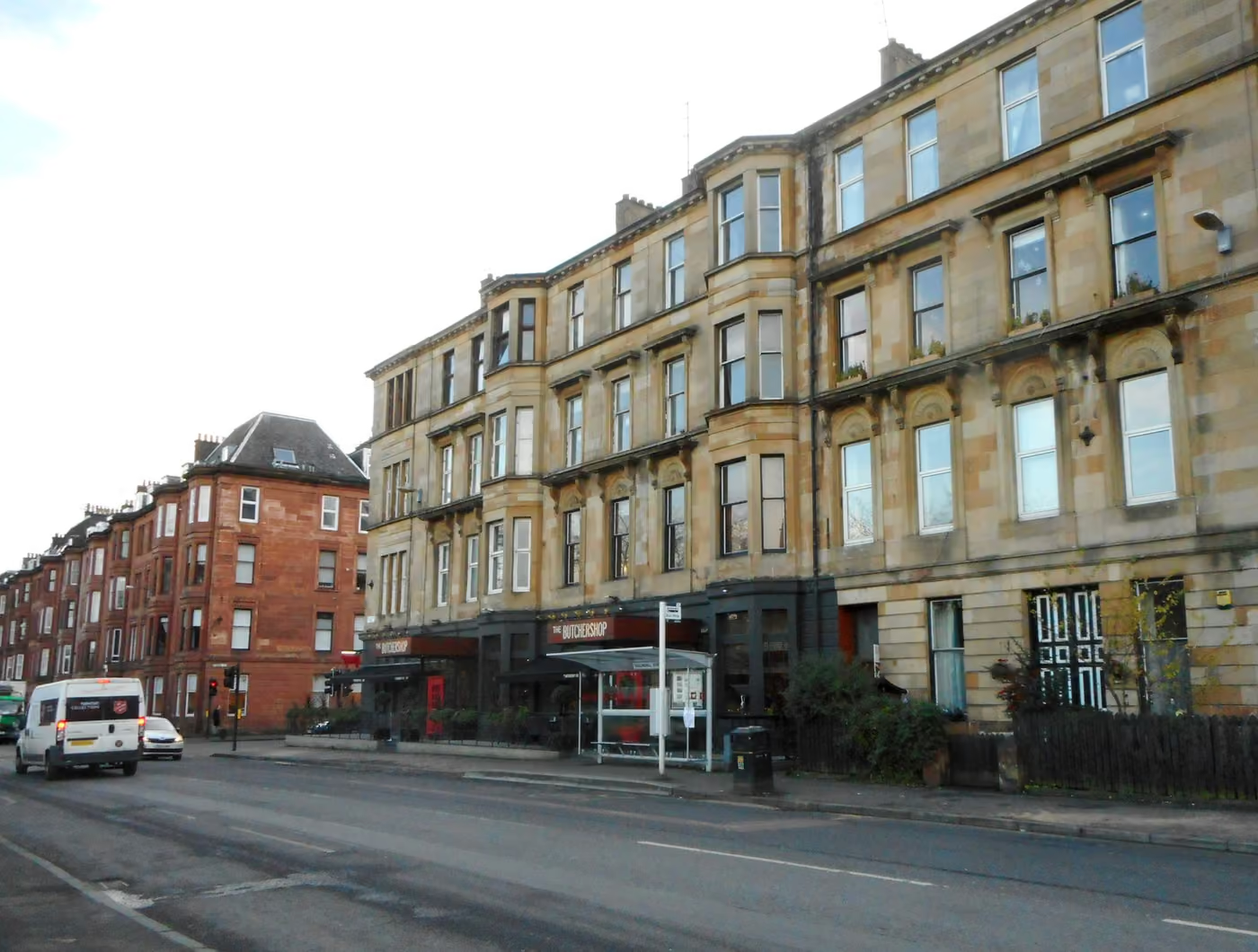
In Glasgow, dry rot is a tenement problem before it is anything else, and the water that caused it is usually coming through something you do not own outright. That changes the job.
- We look before we priceNo quote without a survey
- Written reportSomething a lender will accept
- West of Scotland onlyGlasgow to Ayr and Stirling
If you want the biology, thenational dry rot page covers whatSerpula lacrymans is, what it looks like and how it is stopped. This page is about what it does to Glasgow buildings, because after enough surveys in the West the same handful of causes keep coming back, and almost all of them are outside the flat rather than inside it.
The short version: Victorian and Edwardian tenements put the ends of timber floor joists straight into solid sandstone. There is no cavity, no damp proof course and nothing between the wood and the wall. So the question is never really "why is there rot in the timber", it is "what has been wetting that wall, and for how long". Four answers cover most of it.
Book a survey
Three questions. You do not need to know which problem you have.
One: the rainwater goods, which is most of it
Rones and hoppers cause more dry rot in Glasgow than anything else. A cast iron hopper head with a hairline crack, a gutter joint that has opened up, a downpipe blocked with a decade of leaves and moss, or a length of rone at the back of the building that has been quietly discharging onto the same square metre of sandstone since before you moved in.
Sandstone absorbs a great deal of water, and a wall that gets soaked every time it rains never dries out through a Glasgow autumn. Inside, the joist ends buried in that wall reach the moisture content dry rot needs to establish, and once it has established it can conduct water along its own strands to timber that was perfectly dry. By the time a stain appears on the ceiling below, the fungus has usually been working for a while.
The awkward part is that the failed component is almost always at the back, facing the back court, where nobody looks. Front elevations get noticed because they face the street. Rear elevations get noticed when the ceiling goes.
Two: bay windows
Glasgow bays are a known weak point and worth their own paragraph. A tenement bay is effectively a small building hung off the front wall, with its own little roof, its own gutter, its own stone cills and a timber beam carrying the masonry above the window openings. That is a lot of separate junctions in a small area, and every one of them is a place water can get past.
What we typically find is decay in the beam over the bay, in the timber behind the cills, or at the ends of the floor joists where they meet the bay structure. Because the bay sits on the front, the damage is often first noticed as a soft or bouncy patch of floor in the front room, or plaster coming away at the corner of the window reveal. Bay repairs are more involved than a straight run of wall, because the structure has to be supported while the decayed timber comes out.
Three: the wallhead
Top floor flats get their own version. The wallhead is where the roof meets the top of the wall, often behind a parapet with a gutter running along it, and it is the least visible part of the building from the ground. A blocked wallhead gutter, a failed lead flashing or slipped slates put water straight into the top of the wall, and the joist ends of the top floor ceiling and the roof timbers are sitting right there.
Wallhead rot is frequently found late for a simple reason: nobody can see it. You cannot assess a wallhead gutter properly from a back court, and getting a look often means roof access, which on a common roof means agreement from the other owners before anyone goes up.
Four: the close itself
The common stair, or close, has timber in it too. Landing joists are built into the close walls exactly as flat joists are, and the stair itself often has timber treads and a timber structure behind the stone. A leaking stair window, a broken cupola over the stairwell, a burst pipe in the back court wall or the perennial Glasgow favourite, water running down inside the wall from a defective rone, all end up in the same place.
Dry rot in a close is more serious than it sounds, because it is structural timber holding up the route everybody uses to get home, and because nobody owns it individually so nobody notices it individually. The smell is usually the giveaway before anything is visible: a damp, musty, mushroomy note in the stair that was not there last year.
Two honest points before you spend anything. First, a significant share of what people send us as suspected dry rot turns out to be wet rot, which stays local to the damp, dies when the timber dries and is very much cheaper to fix. Second, if the rone above your flat is still broken, treatment on its own is money thrown away. Any firm quoting you for timber replacement and fungicide without saying a word about where the water is coming from is quoting for the wrong job, and you should ask them about it directly. Seewet rot or dry rot if you are not sure which you are looking at.
The tenement law bit, and why it changes your timeline
This is the part that surprises people who have owned a house before and a flat afterwards. In a Scottish tenement the roof, the external walls, the foundations, the close and the rainwater goods are typically common property, maintained by all the owners together. Your title deeds set out how that works. Where the deeds say nothing, or say something incomplete, the Tenement Management Scheme in the Tenements (Scotland) Act 2004 fills the gap, and under it a maintenance decision is normally taken by a majority of the flats rather than by whoever is most affected.
So the cause of your dry rot may be a repair that is legally not yours alone to fix, and that has three consequences worth planning around.
- Timing. The shared repair moves at the pace of the slowest owner, not at the pace of the fungus. Months, not weeks, is normal.
- Cost. Your share of a shared repair is a fraction of the total, which often makes a job that looked unaffordable manageable. It also means you cannot simply pay for it yourself and have it done tomorrow without a conversation about recovering the rest.
- Evidence. Owners meetings and factors respond to written findings far better than to a neighbour saying the wall feels damp. A survey report is the document that moves a common repair along.
None of that is legal advice, and your deeds take precedence over any general description of the Scheme. But the practical lesson holds: get the timber looked at now, because the paperwork side takes long enough on its own.
What the work usually involves in a tenement
- Stop the water. The rone, hopper, gutter, flashing or roof defect gets fixed. Everything else is temporary until this is done.
- Open up and find the edges. Plaster comes off, boards come up, and the search follows the strands rather than the stain. This is the step that decides the real size of the job, and it is why nobody can quote it from a photograph.
- Cut out the decayed timber. Sound timber past the visible damage comes out too, because the fungus travels further than it shows.
- Deal with the masonry. Where strands have run through the wall, the affected area is treated and, where the design allows, the new timber is isolated from the masonry rather than built straight back into it.
- Reinstate and ventilate. New joist ends, new floor or ceiling, and enough air movement that the conditions the fungus needed do not simply return.
Costs vary more on this than on almost anything else in the trade, mostly because the extent is unknown until the opening up is done. Thedry rot cost page sets out what actually drives the number, anda Glasgow timber survey is how you find out where in that range your building sits.
Questions from Glasgow tenement owners
The dry rot is in the close, not in my flat. Do I still have to pay?
Almost certainly a share of it, yes. The close, the roof, the external walls and the rainwater goods are normally common property in a Scottish tenement, and the cost of maintaining common property is shared between the flats. How it is split depends on your title deeds first and, where the deeds are silent, on the Tenement Management Scheme. Your own share is usually far smaller than the whole bill, which is worth knowing before you decide it is too expensive to deal with.
Our factor is arranging the roof repair but it will take months. Can the rot work start now?
It can start, but starting it in the wrong order wastes money. Dry rot needs water to establish, so treating and replacing timber while the hopper is still overflowing onto that wall means you will be doing some of it twice. What is worth doing straight away is opening up and cutting out, so the extent is known and the decay stops spreading behind plaster while everybody waits. A survey done now also gives you a dated written record of the damage, which tends to concentrate minds at an owners meeting.
Can dry rot really get through the wall into my neighbour’s flat?
Yes, and in a tenement that is the whole problem. Serpula lacrymans is the only timber decay fungus that spreads through masonry away from the water that started it, sending strands through mortar joints and behind plaster to reach dry timber several metres away. In a solid sandstone tenement wall with no cavity and no damp proof course there is nothing to stop it, so decay that began at a joist end on one side can reach the joists on the other. That is why the survey has to go further than the room the damage is in.
One flat in our close is empty and the owner cannot be traced. What now?
It is one of the commonest reasons a Glasgow common repair stalls, and there is no quick fix. The Tenement Management Scheme lets the other owners take a scheme decision without a missing owner, and there are routes through the local authority for dangerous or seriously deteriorating buildings, but both take time and neither is guaranteed. What owners in that position can usually still do is authorise urgent work to stop immediate damage and pursue the missing share afterwards. Take proper advice on it, because this page is not legal advice and your deeds come first.
Will my buildings insurance cover it?
Usually not the rot itself. Most buildings policies exclude damage that happens gradually, and rot from a gutter that has been overflowing for three winters is the definition of gradual. What sometimes is covered is a sudden escape of water, a burst pipe or storm damage to the roof, along with the resulting damage. It is worth reading the policy and reporting the event rather than the fungus. A written survey that identifies the cause and roughly when it started is what an insurer will want to see either way.
Book a survey
Three questions. You do not need to know which problem you have.